
Articles

Planting Soybeans Early

Improved crop management practices and genetics coupled with a changing environment have led some farmers to shift their soybean planting dates earlier than the traditionally recommended planting dates. The main reason for this shift is increased yield potential. While planting time varies by geographic region in the US, most soybean farmers can plant soybeans earlier without compromising yield potential by adhering to a few recommended practices.
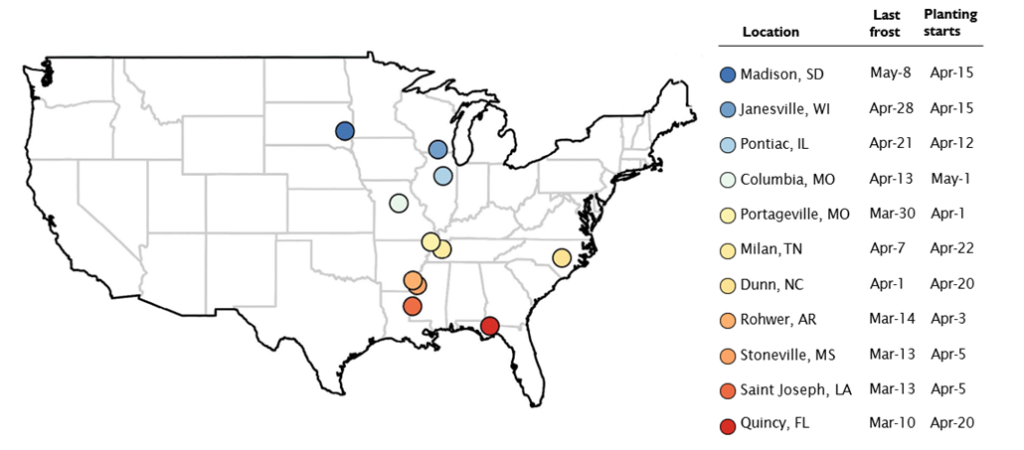
Figure 1. Regional relationship between the historic last freeze date and recommended first planting date. The last freeze is defined by a 10% or lower probability of air temperatures at or below 30°F. The recommended first planting date is a compilation of research findings and extension recommendations.

Potential Benefits

1. Increased Yield

When environmental conditions are favorable for crop development, early planting increases yield by: 

  • Increasing the amount of solar radiation accumulation which results in larger plants (more nodes & pods)
  • Increasing the seed filling period (more grain yield)
  • Increased root development for better access to soil nutrients and water.

2. Early Harvest Date

  • May help mitigate end-of-season risks
  • May save irrigation water
  • May reduce pesticide applications

While many factors have an effect on final grain yield in soybeans, early planting is a relatively easy way to increase yield potential.

Potential Risks

1. Air temperatures below 30 degrees F for extended periods can lead to plant damage or death

2. Wet and cold conditions can lead to soil-borne diseases (e.g. Sudden Death Syndrome and Brown Stem Rot)

3. Soil temperatures below 50 degrees F can compromise germination leading to non-uniform stands, temporal variability, and limited root and shoot growth

4. Poor early season weather or choosing a non-ideal maturity group can compromise vegetative development

Recommended Management Practices

The following practices are associated with high yield in early planting dates:

  • Plant a range of mid to later-maturing soybean than usual.
  • Use seeding rates at or above the recommended level.
  • Use seed treatments to protect against specific pests (i.e. SDS or phytopthora)
  • The effect of seed treatments on yield was found to be small and less critical compared to the planting date and maturity group
  • Apply foliar fungicides as needed when disease pressure reaches threshold levels.
  • Use several herbicide modes of action to help mitigate the damage from herbicide- resistant weeds.

Authors: Andre Reis, University of Missouri; Shawn Conley, University of Wisconsin, Madison; Jonathan Kleinjan, South Dakota State University; Michael Plumblee, Clemson University.


Read the fact sheet here.