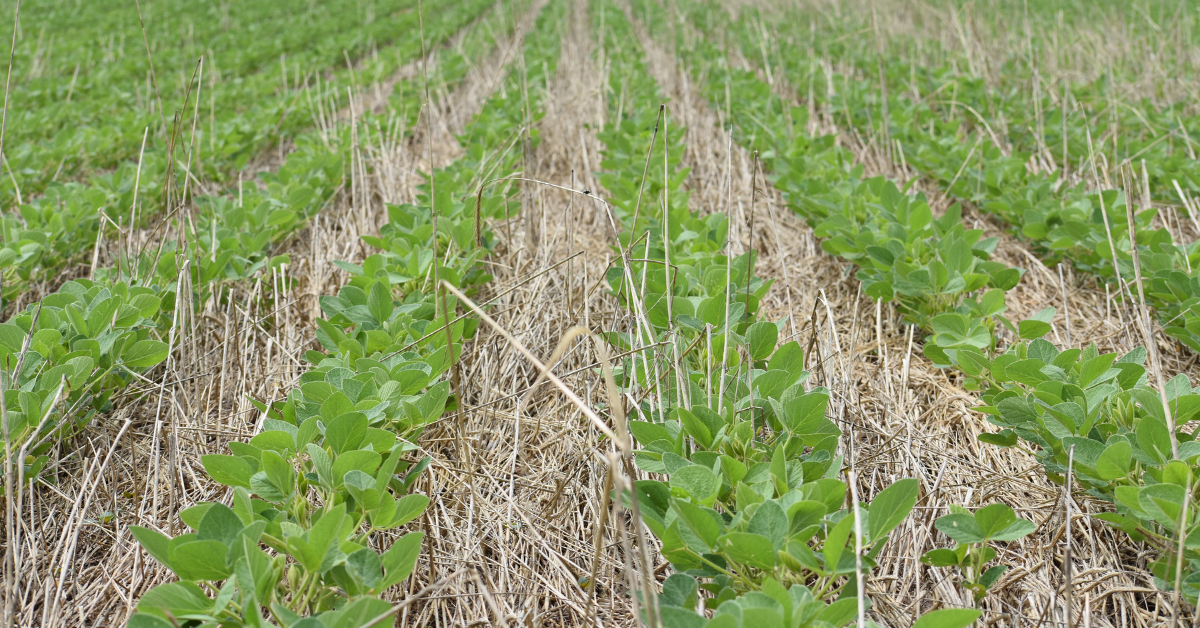
Research from multiple universities shows that narrow rows (≤15 inches) often outperform wider rows (≥30 inches) by increasing light interception, improving weed control, and enhancing plant growth. However, factors like planting date, disease pressure, and equipment availability play a role in determining the best approach for each farm.
Take Away Points
- Soybean producers across the US use row spacing from 7 to 40 inches; row spacing decisions are often largely controlled by equipment availability and rotational complexity.
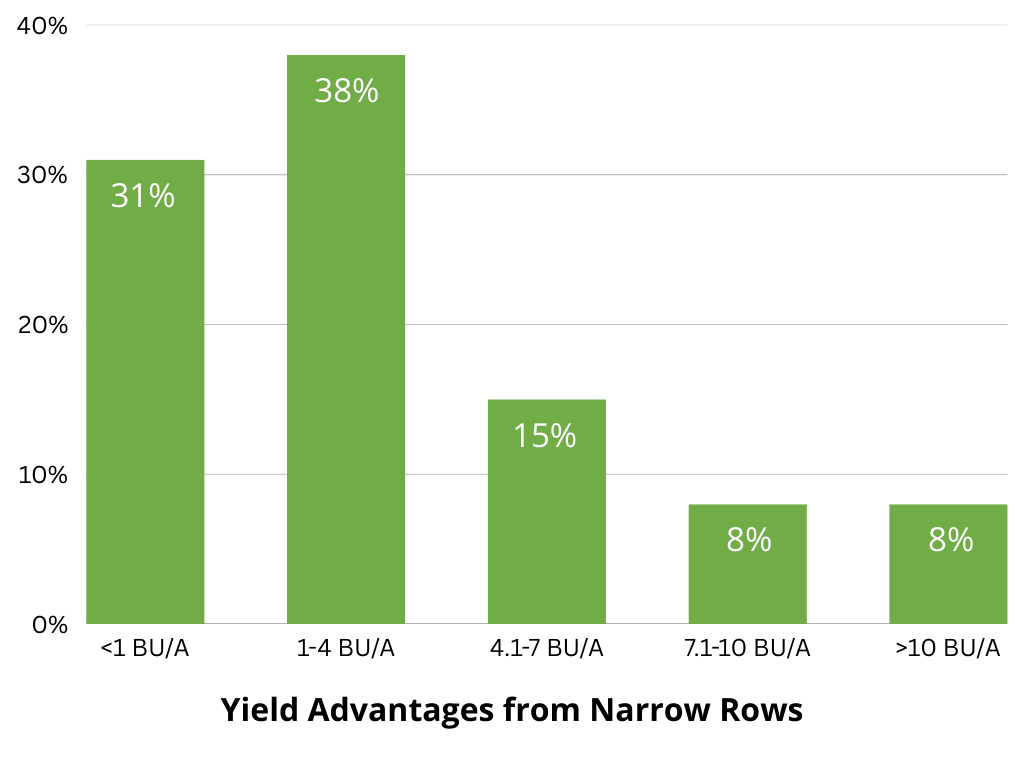
- In research studies, narrow rows (7-15 inches) outyield wider rows (≥30 inches) 69% of the time, due to earlier canopy closure that enables more light interception to drive photosynthesis.
- Beyond yield advantages, faster canopy development with narrow rows also enhances soybean competitiveness with weeds.
National Recommendations
1. Mechanism Behind Narrow Row Yield Advantages:
The primary driver of the yield advantage from narrow rows is more light interception, with more sunlight driving more photosynthesis and growth. Narrow row yield advantages are typically greater with later planting dates, earlier maturing varieties, and high temperatures, all of which reduce the time from VE (emergence) to R3 (initial pod set).
2. Data:
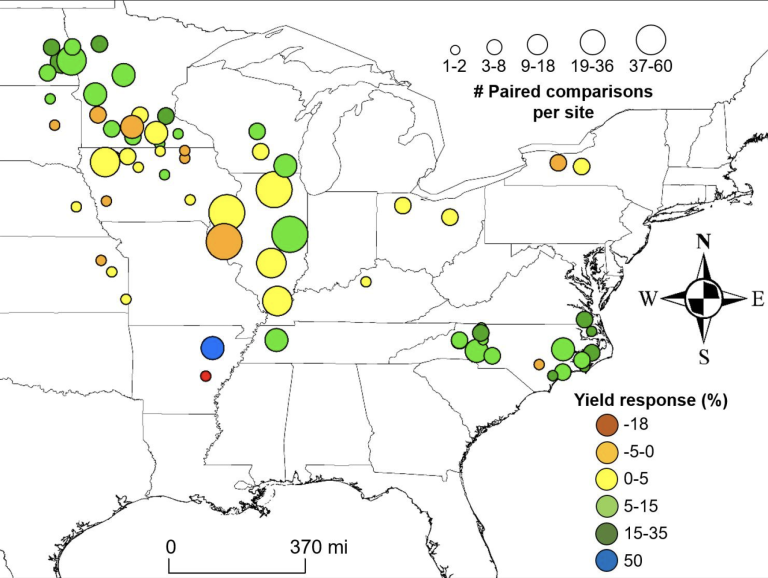
Soybeans in 15-inch or narrower rows usually yield more than soybeans in 30-inch rows, and seldom yield less. Yield advantages for narrow rows typically range from about 1 to 4 bu/A (Figure 1). Yield advantages from narrow rows are typically more pronounced in the South when soybeans are planted later in double crop situations (Figure 2).
3. High-Yield Environments:
Recent analyses across the US indicate that in high yielding situations, there may be less benefit from narrow rows. This lack of response to narrow rows is more likely when soybeans are planted at the optimal time, weeds are effectively managed, and soil moisture is not limiting.
4. Wheel Track Damage:
Yield advantages of narrow rows may be reduced in fields sprayed by ground application in the reproductive growth stages due to wheel track damage causing a 1-5% yield loss (Hanna et al., 2008; Holshouser and Taylor, 2008). This damage can be minimized by following the same sprayer tracks in repeated operations.
5. Planting Date Influences:
The benefits of narrower rows are typically more pronounced in later planting situations due to limitations in vegetative growth from delayed planting date resulting in more reliance on the faster canopy closure in narrow rows to both maximize photosynthesis and restrict sunlight access to weeds.
6. Weed Control:
Narrow row spacing decreases the time needed to close the canopy thereby decreasing light penetration to the soil surface resulting in better weed control. Canopy closure has been shown to be as much as 15 days earlier in 15-inch rows compared to 30-inch rows. As herbicide resistance in weeds continues to spread, narrow row spacing can help reduce selection pressure on herbicides while potentially decreasing the intensity of weed management programs.
7. Drilled Soybeans:
Generally, there is no difference in soybean grain yield when soybeans are grown in 7.5-inch row width (drilled) and 15-inch row width. In Ohio, soybeans planted in 7.5 and 15-inch rows yielded the same while soybeans planted in 30-inch row width yielded 14% less.
8. Planting Equipment:
One of the largest drivers in deciding on row spacing is based on equipment availability contingent on rotational complexity. Decisions about investing in a new planter for soybeans must be weighed against potential yield gains. One of the largest advantages of investing in a new planter for soybeans may be that it can facilitate earlier soybean planting dates by freeing up a planter to focus on soybeans.
Regional recommendations
NORTH
White Mold
White mold (caused by Sclerotinia sclerotiorum) is a severe disease of soybeans in many areas of the upper Midwest, especially prevalent from the eastern Dakotas to Michigan. Cool, wet conditions during early flowering (R1) favor disease development and the disease is often most severe in varieties with a dense canopy. In theory, wider rows allow for more air circulation, a drier soil surface, lower humidity and light quality differences under the plant canopy, which inhibit disease development and infection. However, if environmental conditions are ideal for white mold development, wide rows may not have any impact on the disease. Research in Wisconsin and North Dakota found that wide rows minimized the incidence of white mold but often did not maximize yields, likely because the benefits of narrow rows outweighed the disease consequences. Wide rows (≥30”) are still considered a management tool under severe white mold pressure.
SOUTH
Ultra Wide Row Soybeans
In the Southern US sometimes ultra-wide row spacing (≥36 inches) is used when the same planter is used for cotton or other row crops. In these environments, often with sandier soils, a subsoil shank may be used on the planter to break a hardpan, therefore giving the wider row soybeans a yield advantage.
Double Crop Soybeans
Double crop soybeans should be planted in a narrow row system (≤15 inches) due to delayed soybean planting date and a reduced time to flowering.
Authors: Shawn Conley, University of Wisconsin; David Holshouser, Virginia Tech University; Matthew Inman, Iowa State University; Chad Lee, University of Kentucky; Laura Lindsey, Ohio State University; Mark Licht, Iowa State University; Hans Kandel, North Dakota State University; Jonathan Kleinjan, South Dakota State University; Carrie Knott, University of Kentucky; Seth Naeve, University of Minnesota; Emerson Nafziger, University of Arkansas; Maninderpal Singh, Michigan State University; Rachel Vann, North Carolina State University.