Green stem: delayed or abnormal senescence or maturation in soybean plants
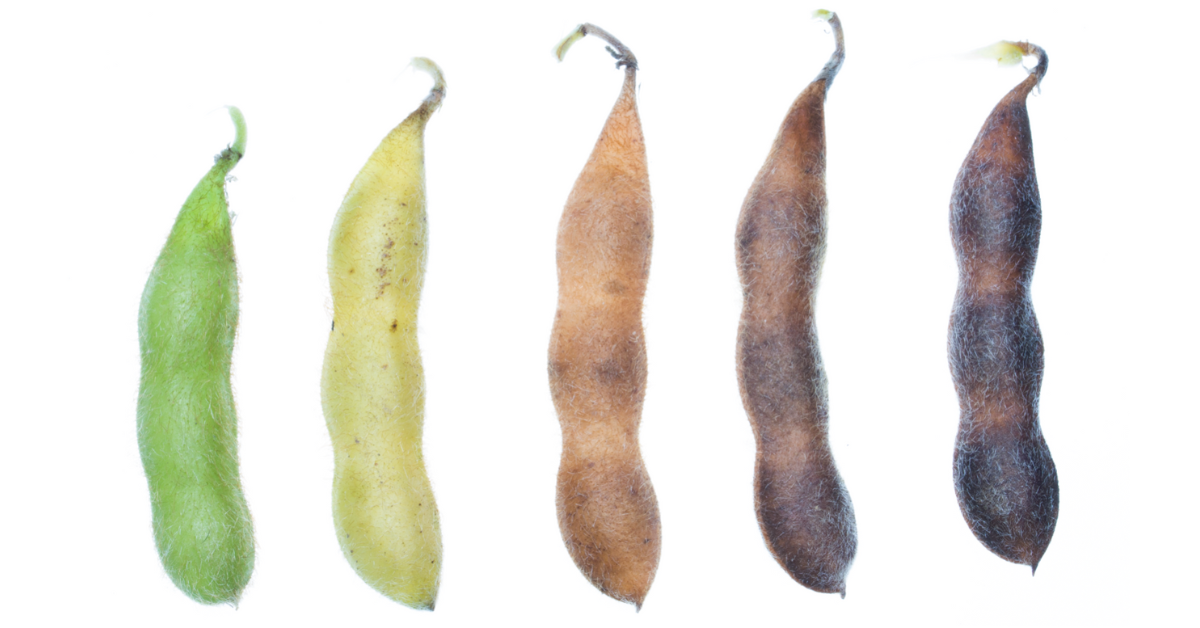
Stems remain green and plants sometimes retain their leaves, even when the pods have reached their mature brown color. This disorder may appear in a very small number of individual plants randomly scattered throughout the field, near field edges, or can uniformly affect nearly all plants in a field.

Causes
unknown
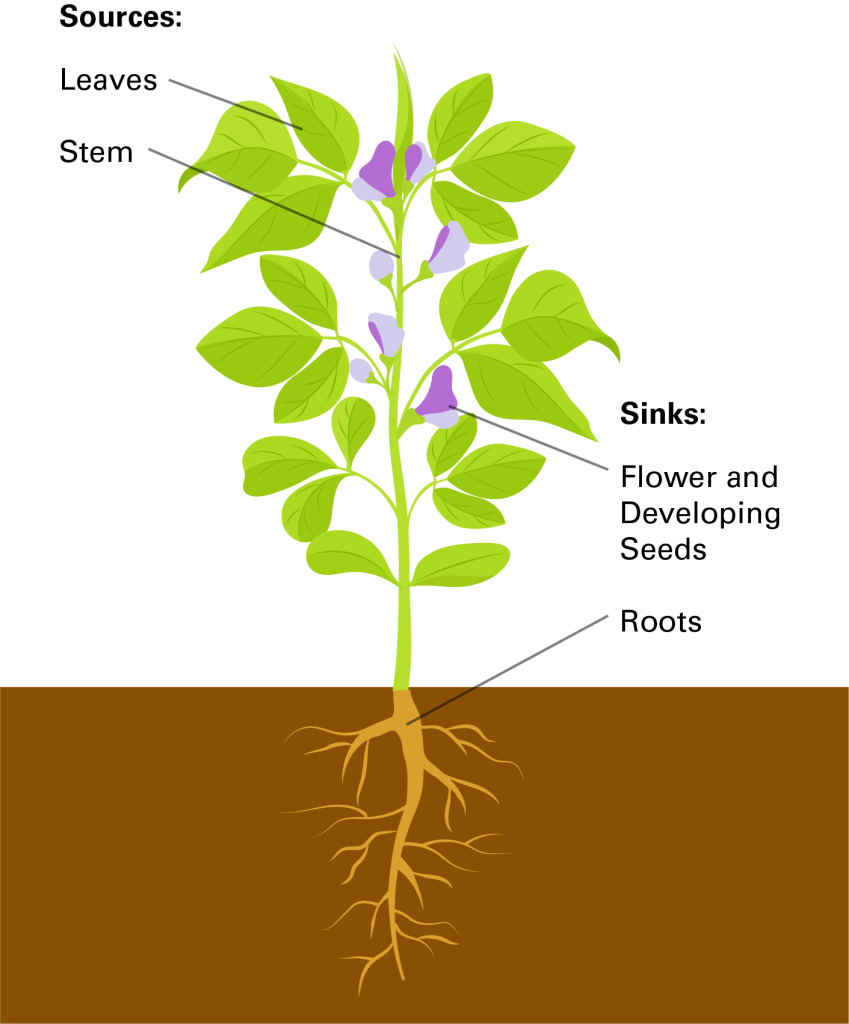
Broadly, any factor that reduces pod development and seed set in developing soybean plants can lead to green stem. Natural senescence in soybean generally requires a strong draw of nutrients from the vegetative portion of the plant (‘source’) to the developing seed (‘sink’). When sink tissue is reduced, nutrients including proteins and sugars are retained in the source tissue, especially the stems. This allows them to remain in a healthy green state beyond the normal maturation period.
Commonly Associated Factors
Seasonal Environmental Stress
Premature loss of pods and/or seeds during mid-reproductive growth stages (R3-R6) inhibits the sink strength. Impacts on green stem vary based on the growth stage at which the environmental stress occurred. Other factors like planting date can complicate management.
Disease
Though not well understood, various diseases are often associated with green stem. It is possible that diseases cause a reduced seed set relative to overall plant health leading to reduced sink strength late in seed filling. Associated diseases include:
- Bean leaf beetle transmission of bean pod mottle virus (BPMV)
- Tobacco Ringspot Virus
- Phytoplasmas
Insects, Specifically Stinkbugs
Stinkbugs’ direct feeding on pods and seeds can reduce the pod-load on a soybean plant. This typically occurs in spotty patches across the field and is most often observed on field edges.
Soybean Genetics
Some soybean plants exhibit green stem because they are genetically predisposed to producing clumps of small, underdeveloped pods. These plants closely resemble male sterile plants that are incapable of producing viable seed. This is often noted in single random plants scattered throughout a field.
Fungicide
The effects of foliar fungicide applications on green stem are not well understood. Some modes of action can provide a ‘stay green’ effect on soybean that delays senescence and can be misidentified as green stem.
Management and Desiccation
Any production or management practice that reduces abiotic and/or biotic stresses should reduce the incidence of green stem.
Need to Know
- Green stem does not appear to limit yield
- Green stem severely reduces harvest efficiency
- Requires operators to decrease speed when combining
- Can plug or choke harvest equipment
- Could contribute to dockage of the soybean grain due to declined seed quality
- Green stem can resolve itself through a hard freeze
- Timing of a hard freeze in southern production regions often occurs too late into the fall to resolve the issue
- Delaying harvest until green stem is resolved often has drastic seed quality implications
- By the time green stem is observed, it is unlikely to be resolved with a harvest aid
- If application of harvest aid is delayed too long, stems may harden and impact absorption and efficacy, providing a “stay green” effect on soybeans that delays senescence and can be misidentified as green stem.

Authors: Seth Naeve, University of Minnesota; Jake McNeal, University of Tennessee; Jeremy Ross, University of Arkansas; Rachel Vann, North Carolina State University.