Soybean Flower and Pod Abscission & Seed Abortion
Soybean plants face many environmental challenges that can significantly impact yield potential. How do soybeans navigate these tough conditions, and what mechanisms do they use to try and produce a crop? These resilient plants constantly manage their resources to maximize yield, especially under adverse conditions. One way that a soybean plant can adapt to the environment is through flower and pod abscission and seed abortion, along with their ability to compensate for these losses.
Definitions:
- Flower abscission: Shedding of flowers (Wiebold, 2012a)
- Pod abscission: Shedding of pods (Wiebold, 2012a)
- Seed abortion: Cessation of development of seeds (Wiebold, 2012b)
Flowering & Plant Resource Management
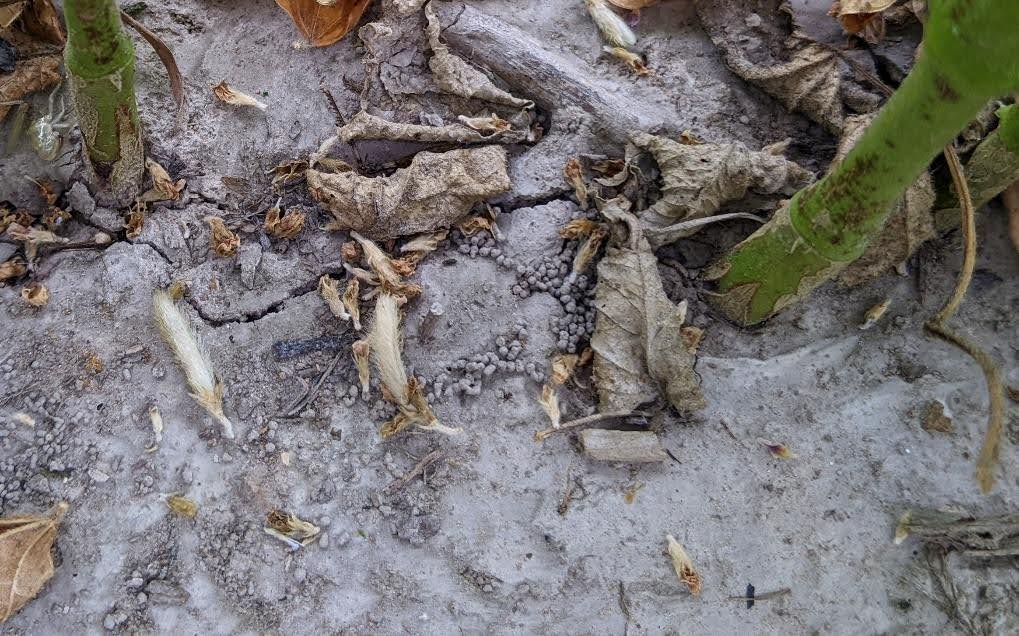
Soybean plants naturally abscise a significant portion of their flowers, ranging from 20% to 80%. This natural shedding increases under stressful conditions like drought (Broeske et al., 2017; Pedersen & Licht, 2018; Wiebold, 2012a). This mechanism allows the plant to reallocate resources to remaining reproductive structures or even to vegetative growth if a significant amount of leaf area is lost. You may observe evidence of this in the field as fallen flowers and small pods (Figure 1).
Compensating for Flower Losses
If the environmental stress subsides and more favorable weather returns, soybean plants can compensate for earlier losses by developing more flowers. This compensatory growth is a key strategy for recovering lost yield potential. This recovery can be observed in the field. Even if a node initially only retained one flower or pod due to stress, the plant can initiate new ones on those same nodes once conditions improve (Figure 2, Board, 1996; Pedersen & Licht, 2018).

Seed Development and Abortion
In addition to producing more flowers and pods, the soybean plant can increase the weight of developing seeds if conditions become more favorable during the critical seed-fill period [about R5-R6] (Knott et al., 2018; McAlister & Krober, 1958). This is another compensatory mechanism, enabling the plant to make up for fewer seeds by increasing the size of the remaining ones.
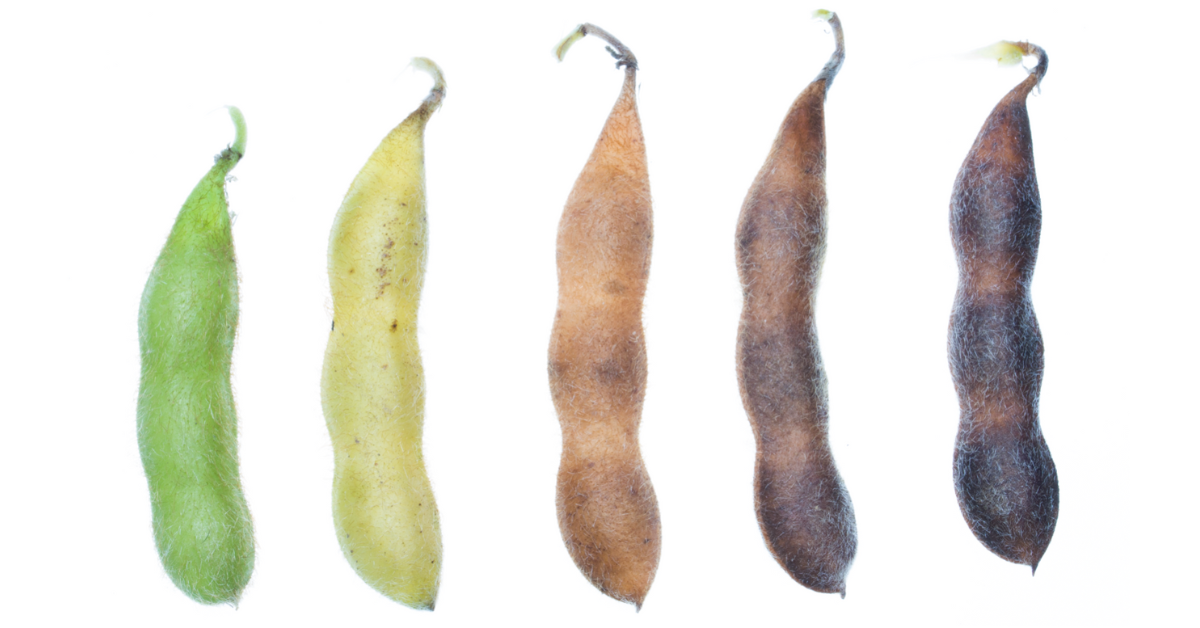
While soybeans demonstrate significant compensatory abilities, there are limitations. Maintaining optimal plant health during seed development is crucial for maximizing both seed number and size, which are primary factors in final yield. The R5.5 growth stage, often extending from R4 through R7, was identified as the most critical period for determining field yield (Cerrudo & Naeve, 2025). Stresses experienced during this time can have a significant and irreversible impact, potentially leading to the abortion of developing seeds (Figure 3).

Maximizing Soybean Yield Potential
Understanding these processes of abscission, abortion, and compensation is important for growers. While some flower and pod loss is natural, minimizing stress, particularly during the critical seed development stages, is essential for maximizing yield potential. Providing a stress-free production environment during these key periods can optimize the soybean plant’s ability to adapt and deliver a successful harvest. Ultimately, by understanding how soybeans respond to stress, we can better implement management practices and interventions to achieve full yield potential.
Author: David Moseley, Louisiana State University
References:
Board, J. (1996). Soybean growth and development. In J. Honeycutt (Ed.), Louisiana Soybean Handbook (pp. 9–15). Louisiana State University Agricultural Center. Broeske, M., Gaska, J., & Conley, S.P. (2017). A Visual Guide to Soybean Growth Stages. Badger Crop Network. https://badgercropnetwork.com/resources/research/soybeans/2017/2017_Soybean_GrowthDev_Guide_FINAL.pdf
Cerrudo, A., & Naeve, S.L. (2025). Redefining soybean critical period for yield determination. Field Crops Research. 321, Article 109662. https://doi.org/10.1016/j.fcr.2024.109662
Knott, C., Lee, C., & Salmeron, M. (2018). Growth and development. In Soybean management in Kentucky (pp. 4-13). University of Kentucky. https://publications.ca.uky.edu/sites/publications.ca.uky.edu/files/ID249.pdf
McAlister, D., & Krober, O. (1958). Response of soybeans to leaf and pod removal. Agronomy Journal. 50(11), 674-677. https://doi.org/10.2134/agronj1958.00021962005000110010x
Pedersen, P., & Licht, M. (2018). Soybean Growth and Development PM1945. Iowa State University Extension and Outreach.
Wiebold, W. (2012a). Arrested development in the soybean field. University of Missouri.
Wiebold, W. (2012b). Arrested development in the soybean field part 2: seed development. University of Missouri.