
Articles

Early Planting: Coaching Your Soybeans to a Gold Medal Harvest

whistle

In the same way that an athlete trains for a race, a soybean plant prepares for maximum yield in a growing season. As a farmer, you are the coach of your soybean crop, and you have one chance each year to win the gold. There are two phases of a soybean crop’s lifecycle – the early stages which we call “vegetative” and the later stages which we call “reproductive.” Understanding what is happening in the growth and development of the crop at these stages can help us manage our crop according to its needs and get it to the finish line.
Training Your Athlete | Vegetative Growth Stages

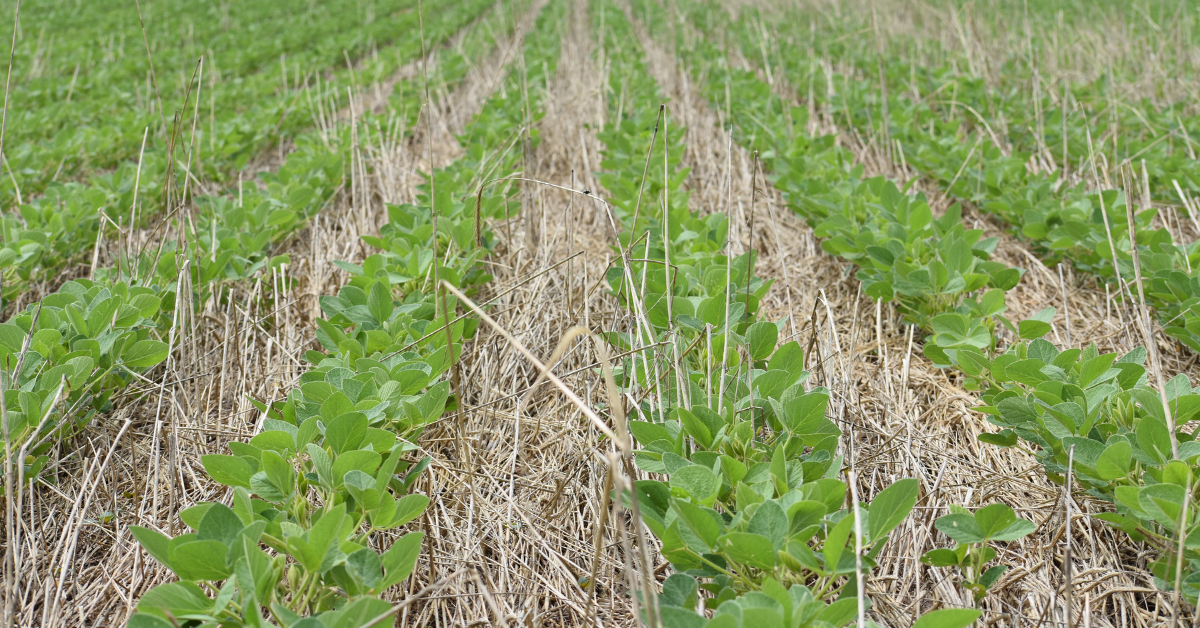
Early in the soybean’s life, it is building the best and strongest body that it can. It is up to the farmer (the coach) to provide for its needs. The earlier training begins, the stronger the athlete will be when it is time to compete in the race later in the season. This is one reason that soybeans planted earlier tend to yield higher than soybeans planted later. Soybeans planted earlier have had more time to put on leaves, branches and nodes to produce a heavy pod load. The “training” is done during the vegetative growth stages of a soybean’s life.

The Starter Pistol | The Summer Solstice

flag gun

The reproductive stage begins around the third week in June, when across North America we have the longest day and the shortest night of the year. This is the starter pistol for our race. Longer nights and shorter days signal to the plant that it is time to begin the race to the finish line and they need to start producing seed. This is why soybean plants often flower right around the summer solstice.

How do soybean plants “hear” the starter pistol?

There is a natural chemical in the leaves, called phytochrome, that acts as a stopwatch. When the nights get longer, the chemical sends a signal to the plant that winter is coming. This communicates to the plant that they must finish seed production before the cold weather. This is an evolutionary adaptation that developed from soybeans originating in a climate with all four seasons. The only way that the species can survive winter is in seed form. Phytochrome in the leaves sense night-length to help the soybeans measure how much time they have left.

Graphic Depicting soybean growth stages. On the left there is a germinated soybean seed compared to the right where there is a mature soybean plant.

The Finish Line | Physiological Maturity

medal

The life of a soybean crop is a race against time. Planting as early as possible in a growing season gives your crop the time it needs to build a strong body to produce maximum yield, and win you the gold.
Citations

Author: Jenny Carleo, North Carolina State University.

Read the factsheet here.