Key Takeaways
- Soybeans have the greatest nitrogen (N) requirement per bushel among row crops
- Biological N-fixation generally provides 40-70% of total soybean N requirement
- Inoculum (Bradyrhizobium japonicum) may be necessary in fields not recently planted with soybean
- Well-nodulated roots with active nodules are foundational for soybean growth and yield potential
Why Nitrogen Matters

Fun Facts
- 40-70% | N-fixation generally provides 40-70% of total N for soybeans1
- 3-4x | Soybean crops require three to four times more N per bushel than cereal crops such as corn, wheat, or rice.
Need to Know
N-fixing bacteria can be introduced through seed or in-furrow inoculation in the form of powders, liquids, or granular.
Bacteria are alive and should not be exposed to high temperatures or direct sunlight.
Even when soybean seeds are inoculated with the right bacteria and method of application, satisfactory nodulation is not guaranteed.

Development stages defined by Fehr and Caviness (1977)².
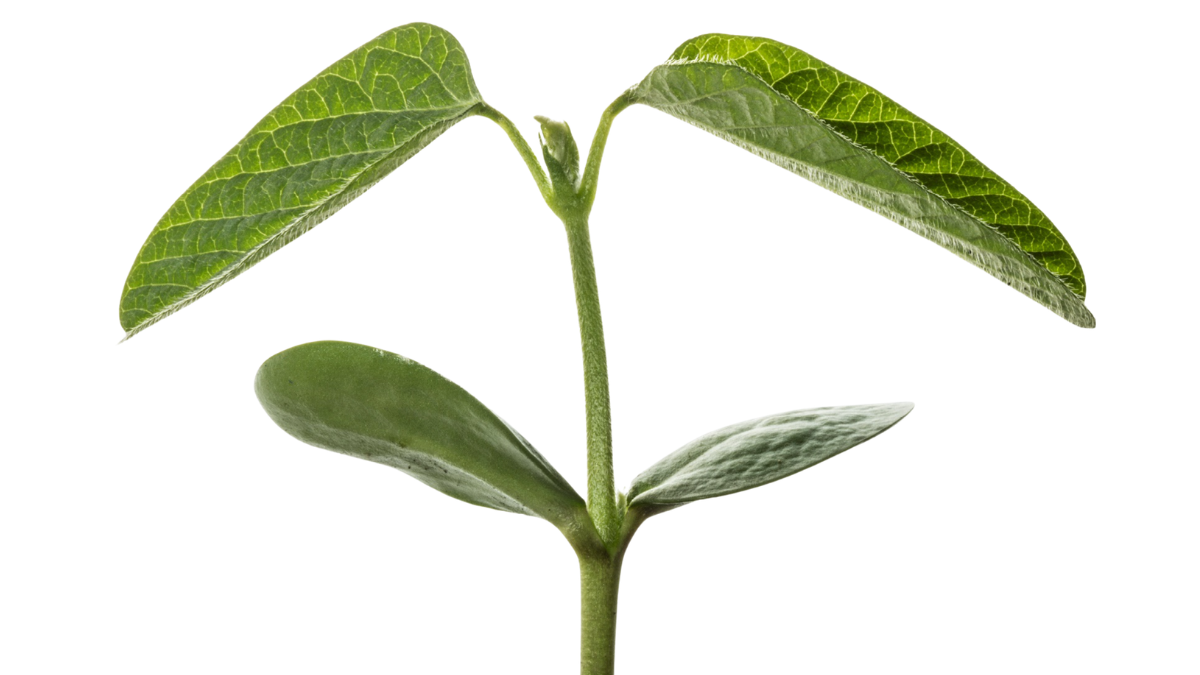
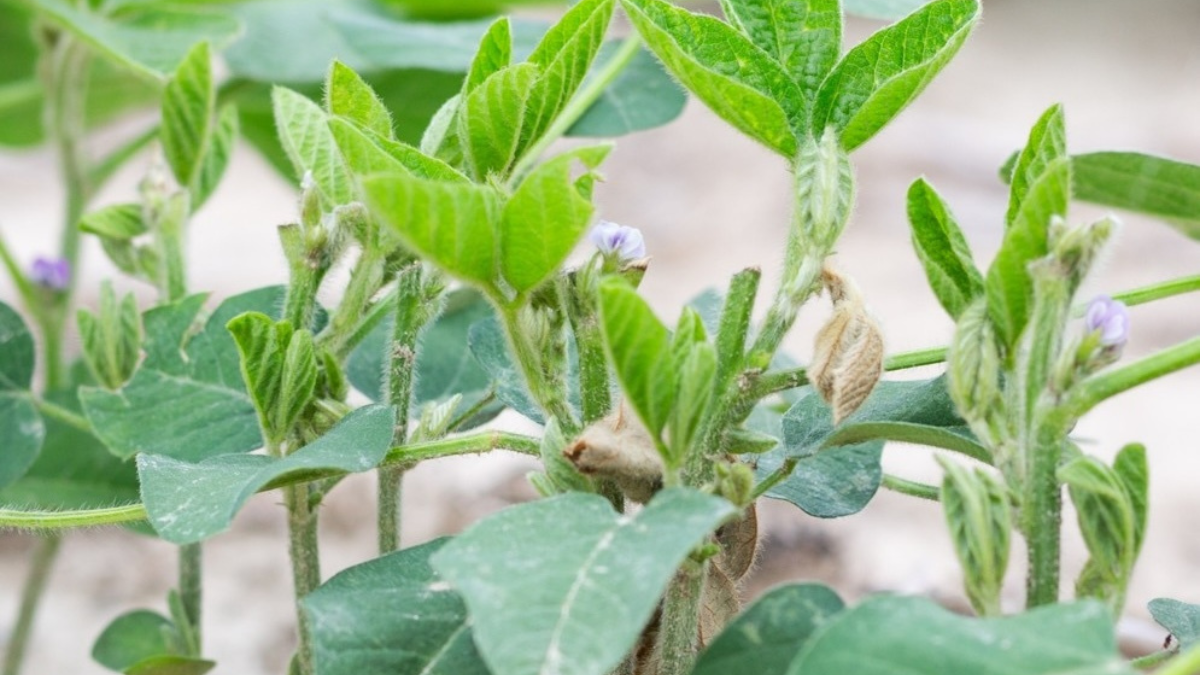
“V” stands for Vegetative stage. VE: emergence; VC: cotyledons fully expanded; V2: fully developed trifoliate leaf at node above the unifoliate leaf; V3: fully developed trifoliate leaf at node above the first trifoliate leaf; V4-V5: third trifoliate leaf fully expanded; V7-V8: sixth trifoliate leaf fully expanded; R3 (beginning of pod setting): a pod of 3/16 inch long at one of the four uppermost nodes on the main stem with a fully developed leaf; R5: (beginning of seed filling) a seed 1/8 inch diameter in a pod at one of the four uppermost nodes on the main stem with a fully developed leaf; R7 (physiological maturity): one “normal” seed-filled pod on a plant will have matured to a brown pod color; R8 full maturity: 95% of the plant’s pods will have matured to a final brown color.
Factors That May Compromise Nodulation and N-fixation:
- Low or high temperatures
- Low or high soil pH
- High salinity
- Dry or excessive water conditions
- Nutrient deficiency
- High soil N level
Determining Successful Nodulation and N-fixation
- Scout for the presence of nodules after V3 to V4 stage.
- Carefully dig up plants in several locations of the field to avoid removing nodules.
- Wash the roots in a bucket of water.
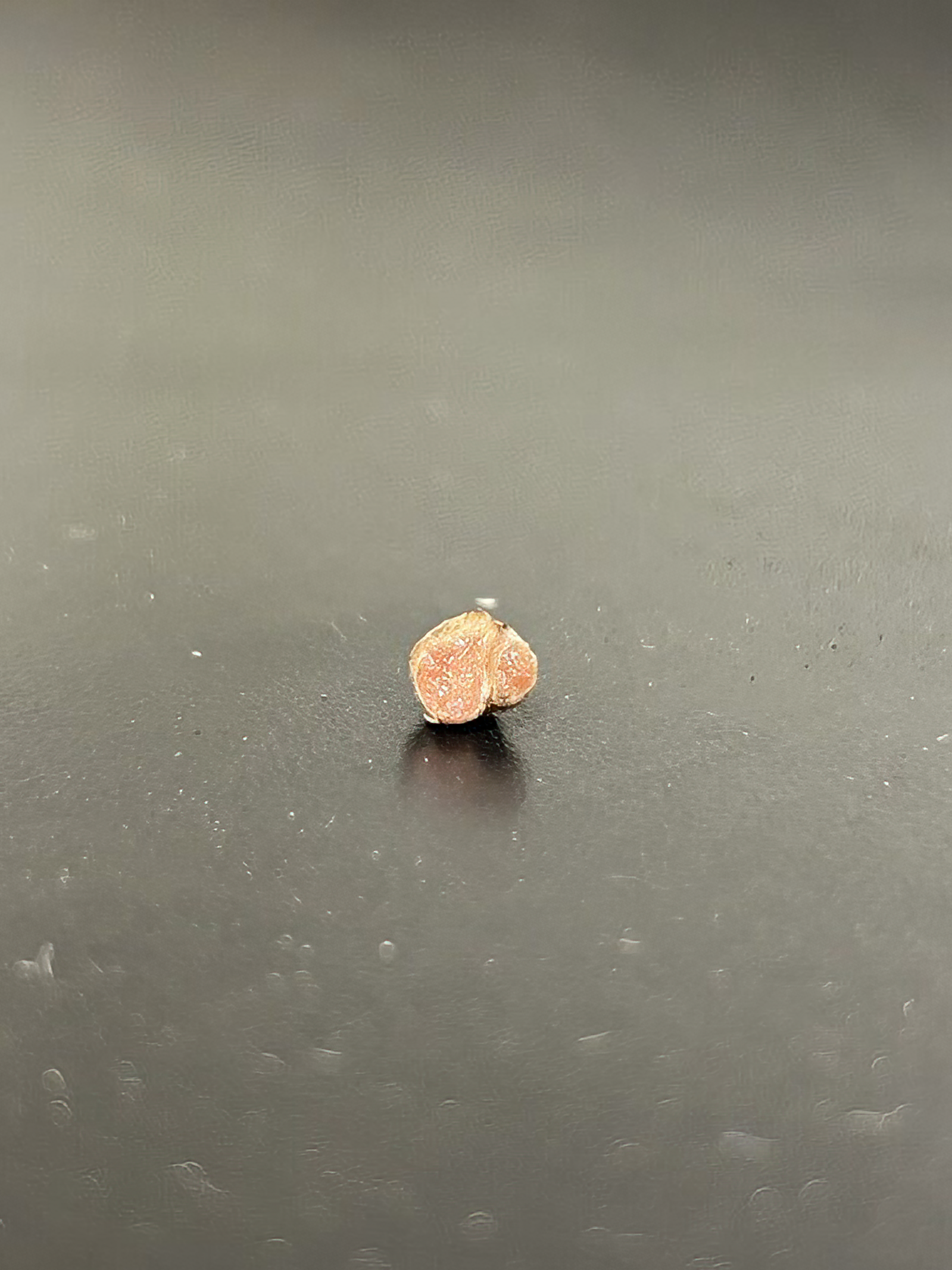
Successful Nodulation
The plant has several active (pink) nodules and can fulfill soybean N requirements for an average yield (50 bushels per acre).
Unsuccessful Nodulation
- Nodules are present, but they are green or white, which means they are not fixing N
- No nodules are present and the plants show yellowing from N deficiency

What Now?
- Additional soil inoculation will have no effect after planting if nodules are not already present
- A rescue N application may be warranted (contact your local Extension office for recommended rates)
- Inoculate with Bradyrhizobium japonicum the next time soybean is planted in the same field
Authors: Nicolas Cafaro, University of Nebraska; Shawn Casteel, Purdue University; Eros Francisco, Auburn University; David Holshouser, Virginia Tech University; Hans Kandel, North Dakota State university (Emeritus); David Moseley, Louisiana State University.
References:
¹Almeida, Luiz Felipe A., et al. (2023). Soybean yield response to nitrogen and sulfur fertilization in the United States: contribution of soil N and N fixation processes. European Journal of Agronomy, 145. https://doi.org/10.1016/j.eja.2023.126791
²Fehr, W. R., Caviness, C. E., & Vorst, J. J. (1977). Response of Indeterminate and Determinate Soybean Cultivars to Defoliation and Half‐plant Cut‐off 1. Crop Science, 17(6), 913-917. https://doi.org/10.2135/cropsci1977.0011183X001700060024x