Achieving Successful Double-Crop Soybean Systems

Key Points:

  1. The shorter growing season for double-crop soybean may reduce yield.
  2. Adjustments can be made to help double-crop soybean overcome this challenge.

Management Practices for Double-Crop Soybean

Double-crop soybean are soybeans planted behind another crop, typically a winter grain crop like wheat, that allow farmers to maximize land use in a single year. However, the shorter growing season for these soybeans can reduce yield and some adjustments are necessary. The following are some management practices to help you have a successful double-crop system.

Planting Timing

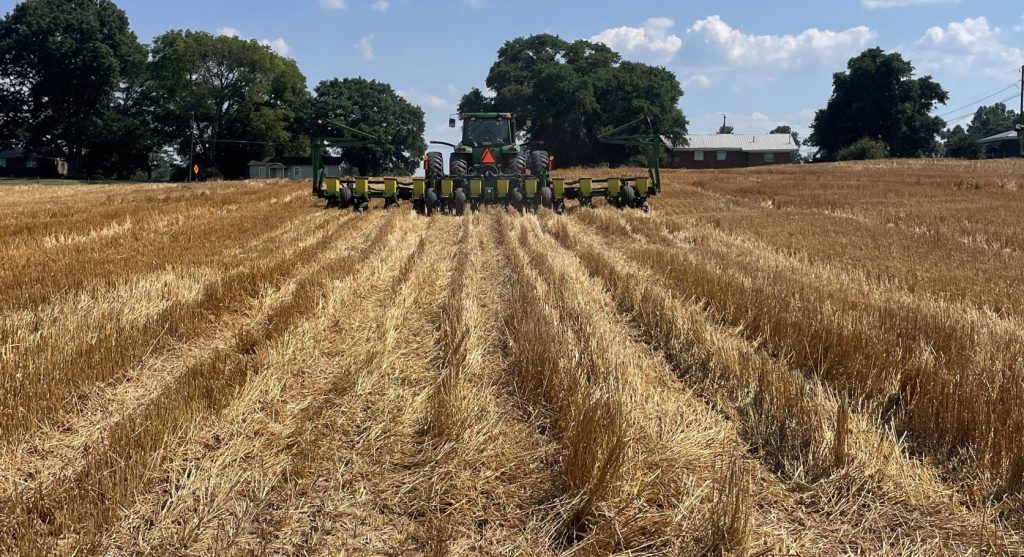
Planting as soon as possible after the first crop harvest is key to maximizing yield. Harvesting the previous crop at a higher moisture content followed by artificial drying is a potential option to get soybean planted earlier. Field conditions such as excessive or low soil moisture and residue management (Figure 1) may further delay planting, so planning ahead and scouting are critical.

A wheat field that has been harvested with the bulk of straw remaining. In the distance you can see a combine moving away from the camera with a blue sky.
Figure 1. Wheat residue after harvest. Photo Credit: Cade Grace

Seeding Rate & Row Spacing

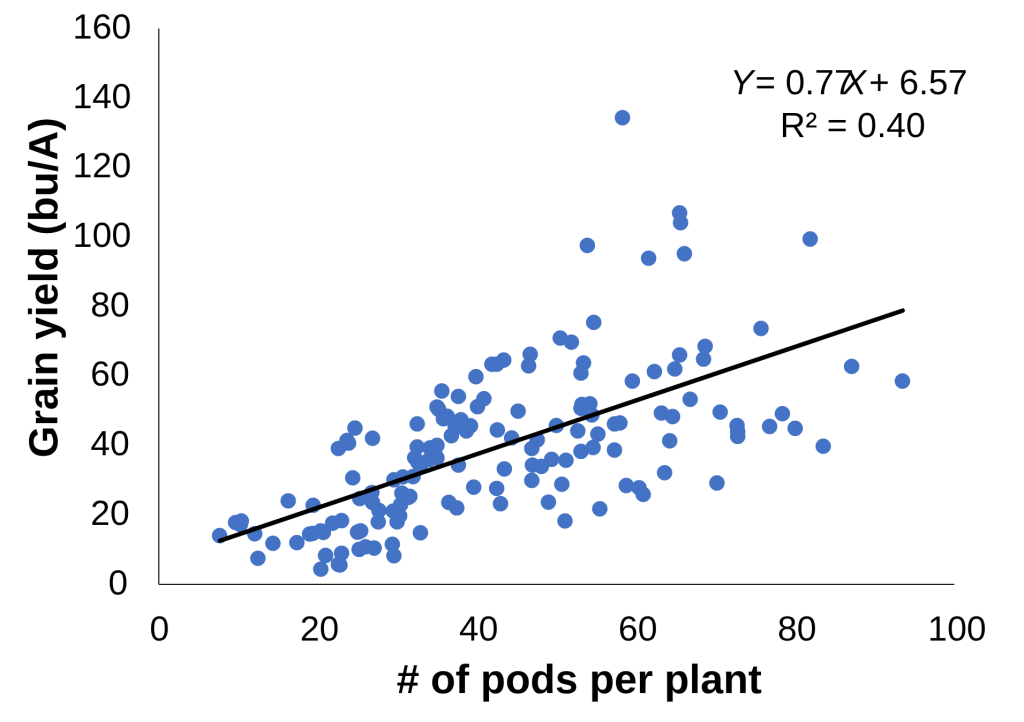
Higher seeding rates, plus narrower row spacing, can help achieve faster canopy closure. This can help increase pod production within the shorter growing season (Figure 2). Nevertheless, the best seeding rates for maximizing soybean yield range from 120,000 to 150,000 seeds per acre in most cases.1

Figure with grain yield in bushels per acre on the y axis and number of pods per plant on the x axis. The y axis goes from 0 to 160 in increments of 20 and the x axis goes from 0 to 100 in increments of 20. Blue dots depict data points and are clustered tightly at lower numbers of pods per plant and get looser as number of pods per plant increases. Generally grain yield increases as number of pods per plant increases. There is a black line that shows the trend. There is an equation of Y=0.77x + 6.57 and the R squared value is 0.40.
Figure 2. Relationship between the number of pods per plant and soybean grain yield. Source: author’s unpublished data from Alabama.

Pest & Nutrient Management

Double-crop soybean reach growth milestones on a different timeframe than those planted at “normal” times. Monitor for emerging biotic and abiotic issues and be prepared to act. Consider the soybean nutrient needs if the previous crop was high-yielding, especially nitrogen and potassium.

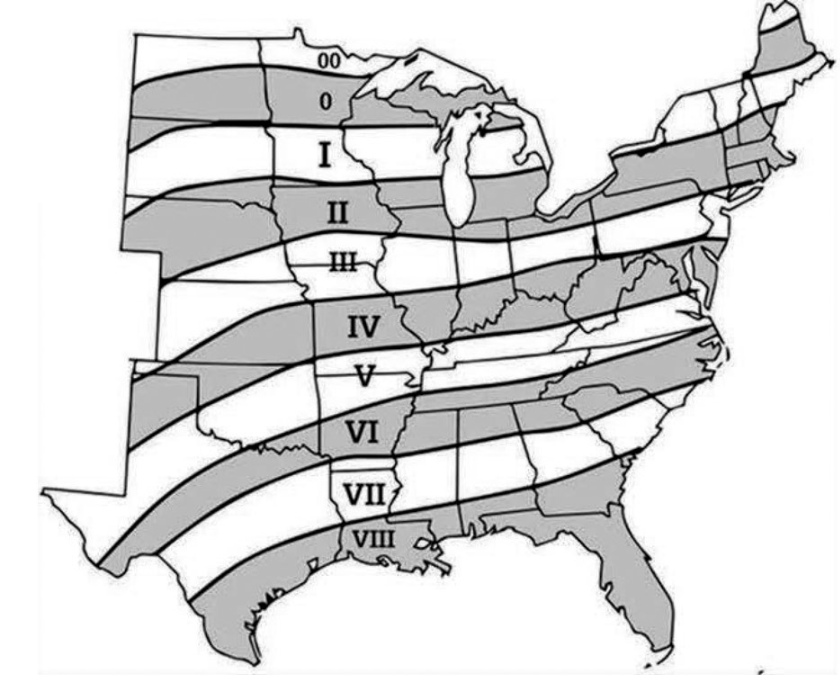
Map of most of the United States showcasing the range of different soybean maturity groups.
Figure 3. Map showing soybean maturity group adaptations.

Variety Selection

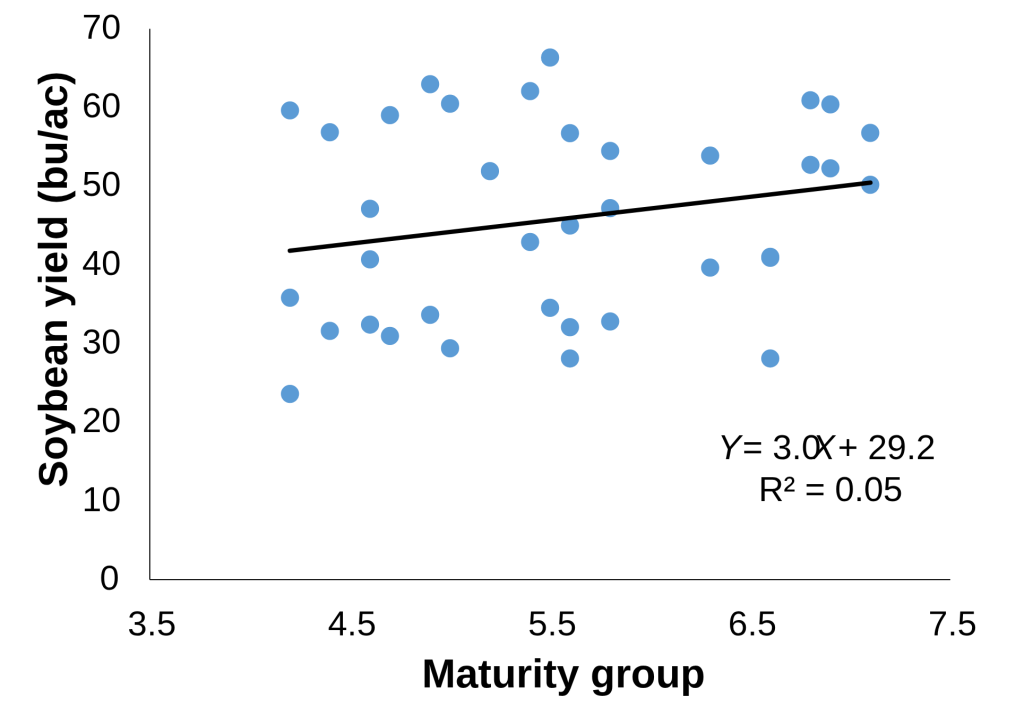
Soybean maturity groups are adapted to different regions and vary according to latitude (Figure 3).2 Choosing a later maturity group soybean variety within your region can help compensate for the shorter growing season in the Southeast US (Figure 4).3

Figure 4. Grain yields of soybean by maturity group when planted behind wheat. Source: author’s unpublished data from Alabama.

Crop Insurance

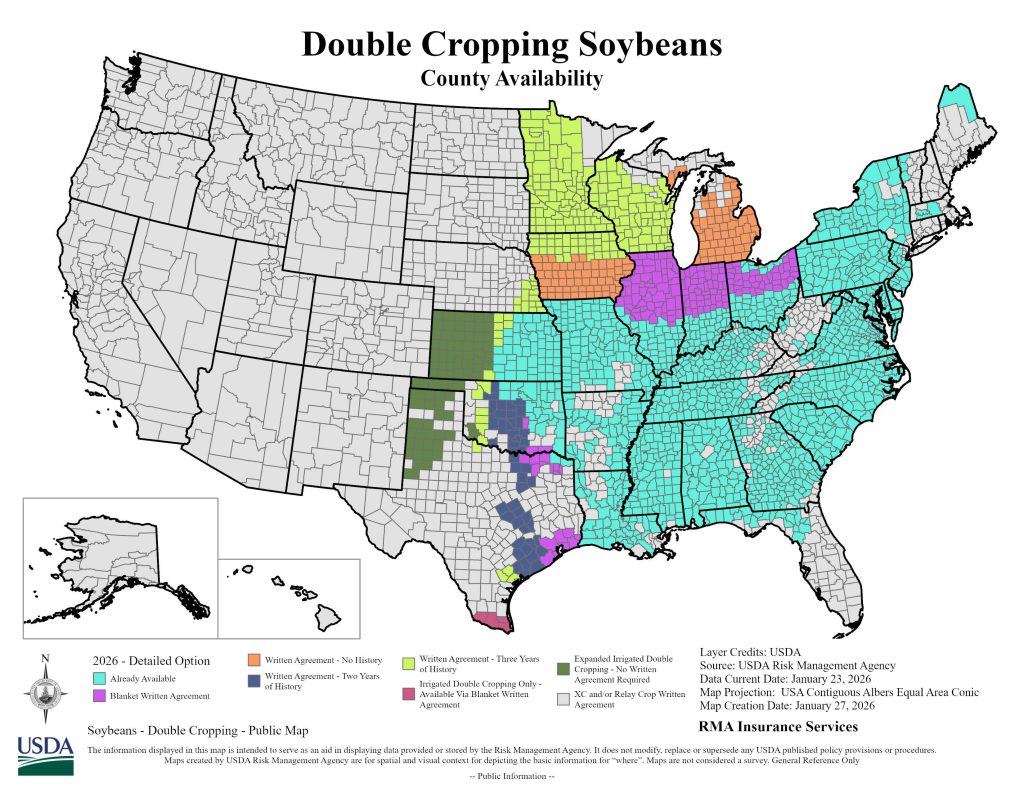
Finally, double-crop soybean systems may be at greater risk due to things like weather conditions. Check to see if crop insurance is available in your area for double-crop soybean (Figure 5).

Map of the US showing the RMA insurance information for double crop soybean.
Figure 5. USDA map for double-cropping soybean.

Author

Eros Francisco, Auburn University

References

1Conley, S.P., Holshouser, D., Inman, M., Lee, C., Lindsey, L., Licht, M., Kandel, H., Kleinjan, J., Knott, C., Naeve, S., Nafziger, E., Ross, J., Singh, M., Vann, R. (2021). Soybean Plant Population Density. Science for Success. https://resources.ipmcenters.org/resource.cfm?rid=45260&vid=30379 

2Carleo, J., Carrijo, D., Casteel, S., Conley, S.P., Francisco, E., Holshouser, D., Kandel, H., kleinjan, J., Lee, C., Licht, M., Lindsey, L., Matcham, E.G., Moseley, D., Mulvaney, M., Naeve, S., Nafziger, E., Plumblee, M., Fontes, G.P., Ross, J., Singh, M., Vann, R. (2023). Keys to Success: Choosing the Right Soybean Variety. Science for Success. https://resources.ipmcenters.org/resource.cfm?rid=45263&vid=30383

3Morris, T. C., Vann, R. A., Heitman, J., Collins, G. D., & Heiniger, R. W. (2021). Maximizing soybean yield by understanding planting date, maturity group, and seeding rate interaction in North Carolina. Crop Science, 61(6), 4365-4382.https://doi.org/10.1002/csc2.20603