
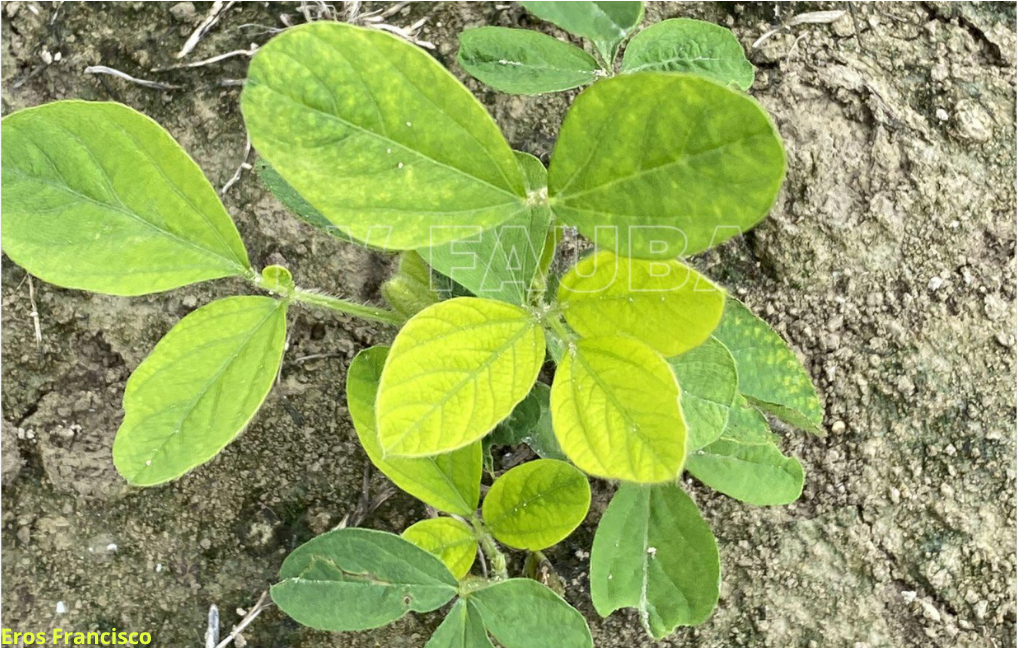

Nutrient deficiency in a crop can be easily mistaken for other problems such as diseases, herbicide injury, or damage from abiotic stress. Farmers who are able to identify visual symptoms of nutrient deficiency can address limitations in a timely manner and preserve soybean yields.
4 Ways Nutrient Deficiencies are Expressed in the Field
1) A General Event
2) In A Gradient
Not individual or group of plants
Bottom to top or vice versa
3) With Symmetry
4) Within Categories
Each side of the plant
Chlorosis, necrosis, lack of plant growth, plant pigments, and overall plant stunting.

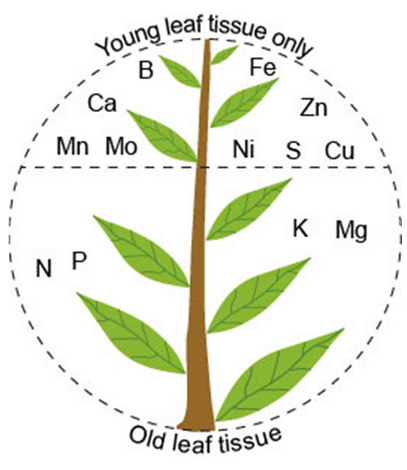
The general occurrence of visual symptoms depends on the nutrient mobility within the plant and follows this basic rule:
N, P, K, Mg → Visual symptoms generally occur on the older leaves or at the bottom of the plant Micros, Ca, S → Visual symptoms generally occur on the younger leaves or at the top of the plant
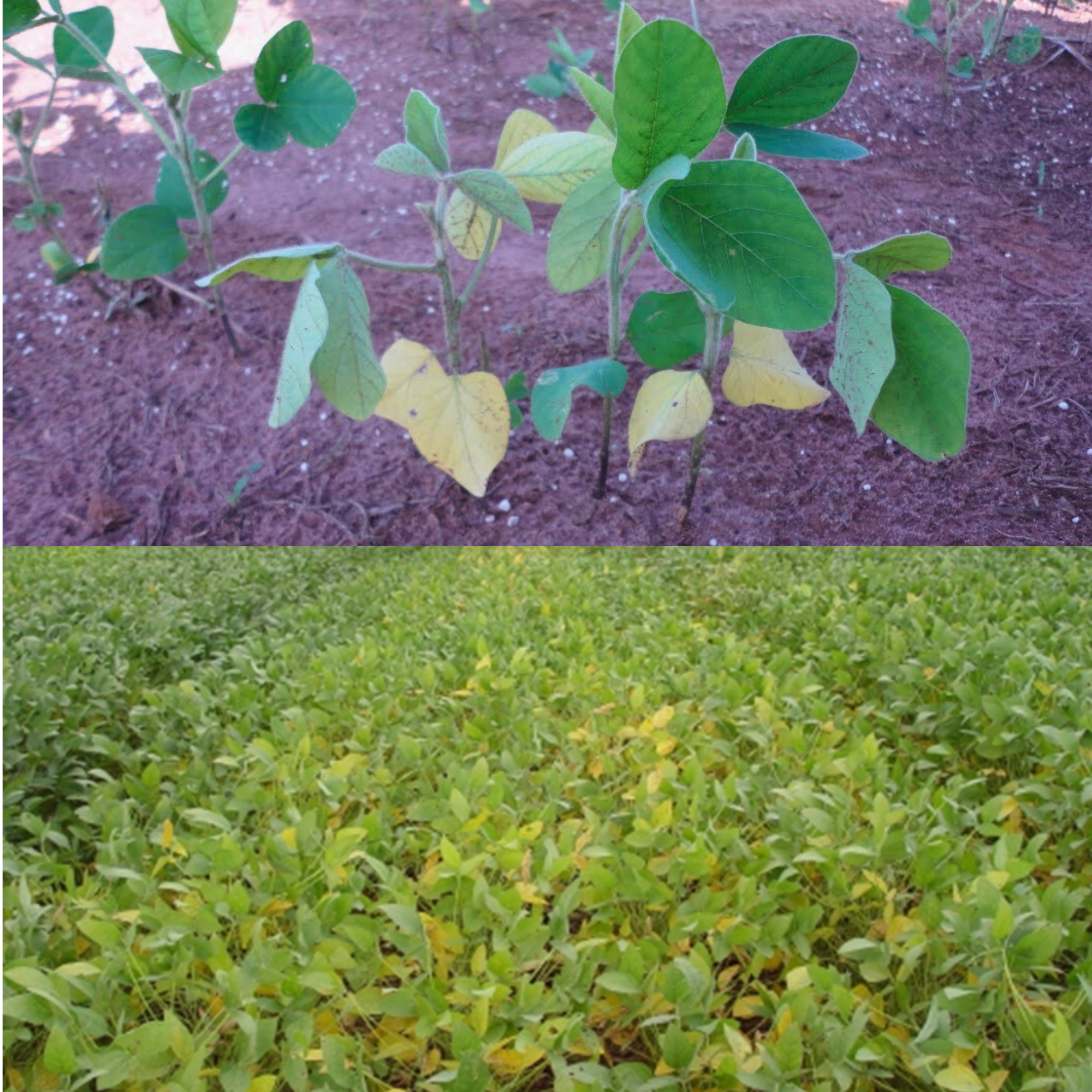
Examples of Nutrient Deficiency

Nitrogen (N) & Sulfur (S)
General slow growth and yellowing of the plant starting on older leaves (N, top) or younger leaves (S, bottom).
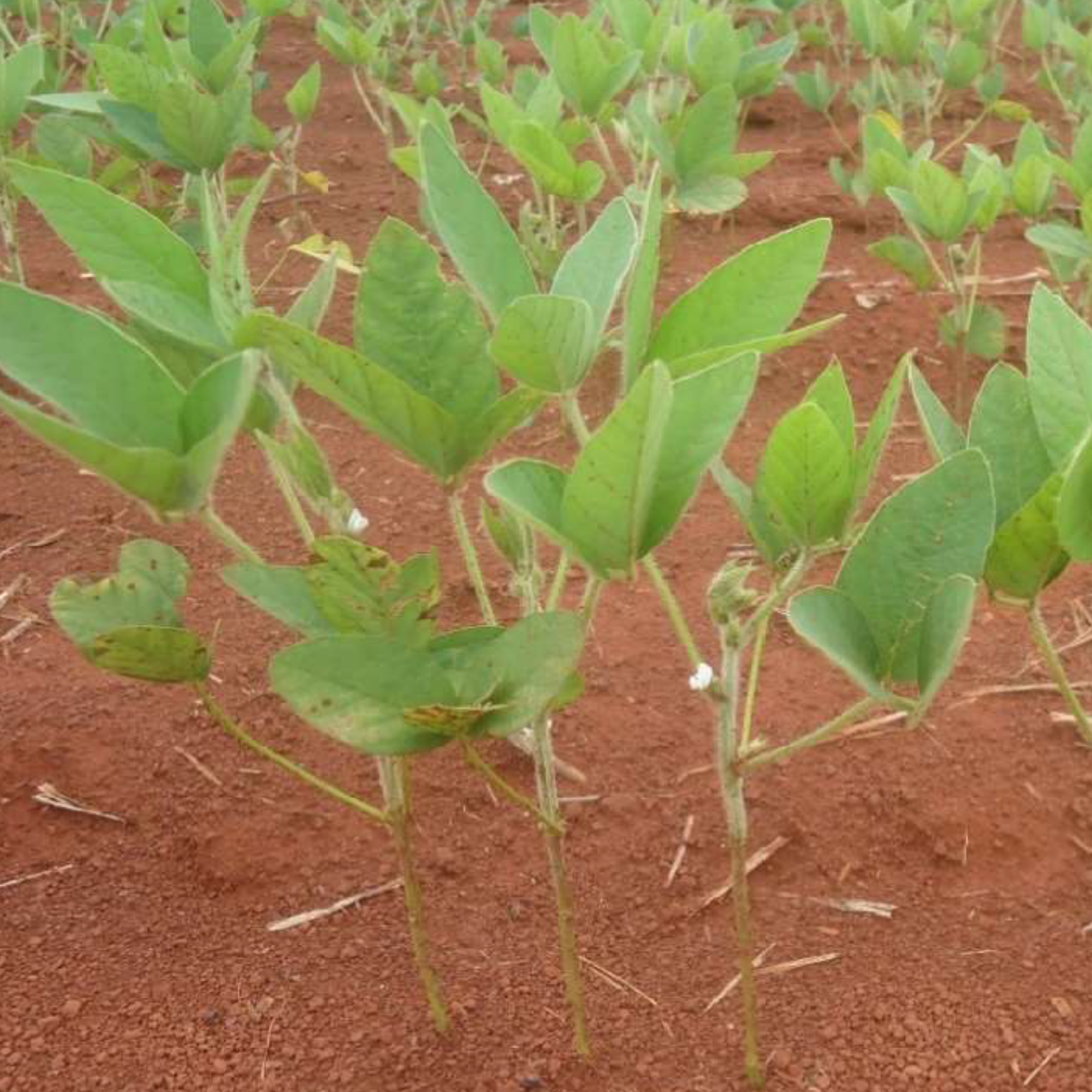
Phosphorous (P)
Spindly and stunted plants with smaller leaflets. Growth is severely impacted.

Potassium (K)
Marginal yellowing of older leaves; also affects soybean seed quality.

Calcium (Ca)
Premature senescence of younger leaves with small brown spots. Severe deficiency causes the collapse of petioles.

Magnesium (Mg)
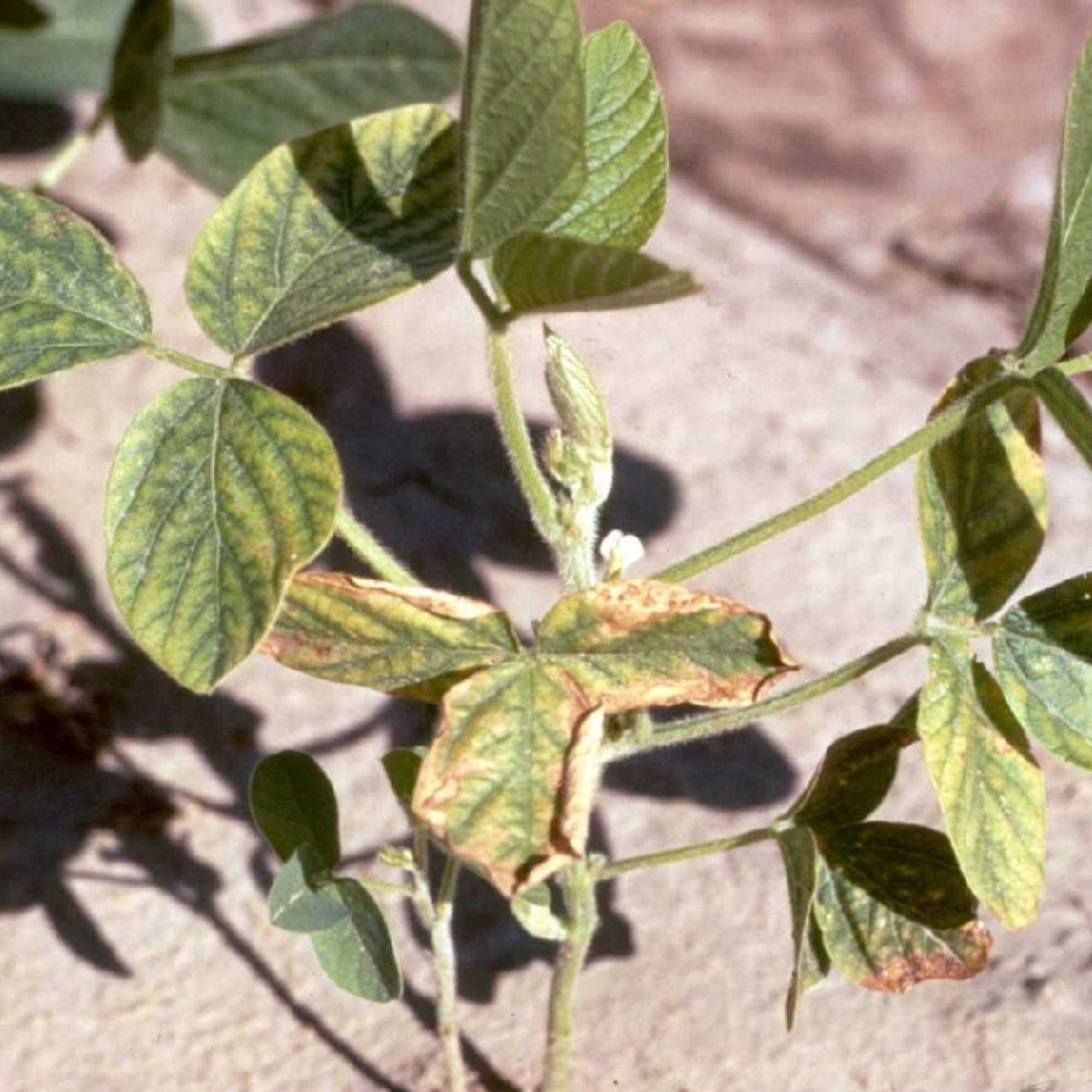
Interveinal chlorosis of older leaves.

Iron (Fe) & Manganese (Mn)
Interveinal chlorosis of younger leaves with (Mn) or without (Fe) green veins.
Zinc (Zn)
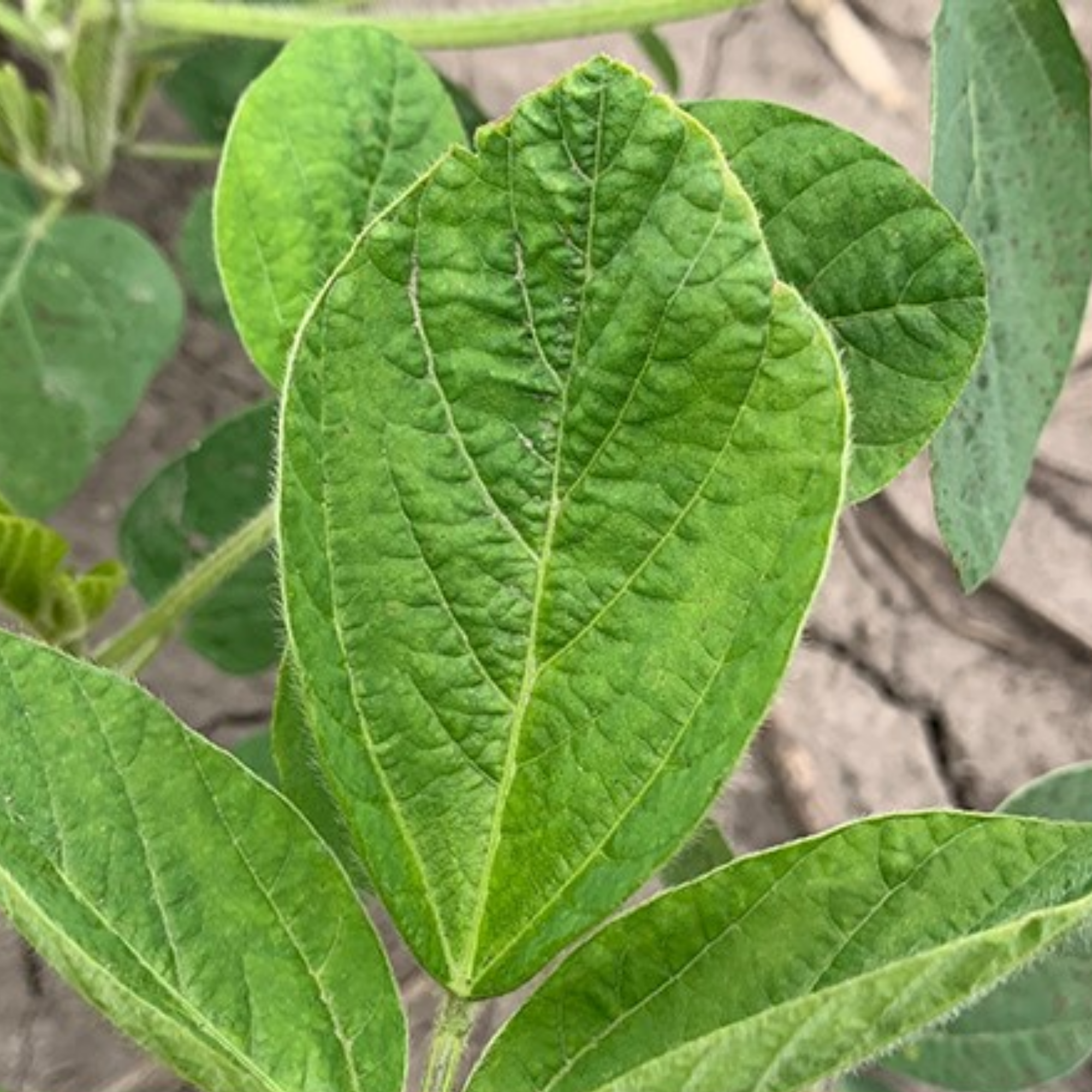
Interveinal chlorosis of younger leaves accompanied by stunted growth.
Boron (B)
Swollen nodes with stunted growth and death of growing points.
Key Takeaways
- Start scouting for nutrient deficiencies during early stages (V4-V5) when roots are more developed and exploring more volume of soil. The earlier the diagnosis the better the chances to prevent further damage.
- Micronutrient deficiencies are easier to correct during the season, while macros may depend on future applications like liming the soil to supply Ca or Mg in larger quantities.
- Preventing nutrient deficiencies starts with a soil test and evaluation of nutrient levels. Work in advance to allow time for potential corrections in the soil.
Author: Eros Francisco, Auburn University, June 2025