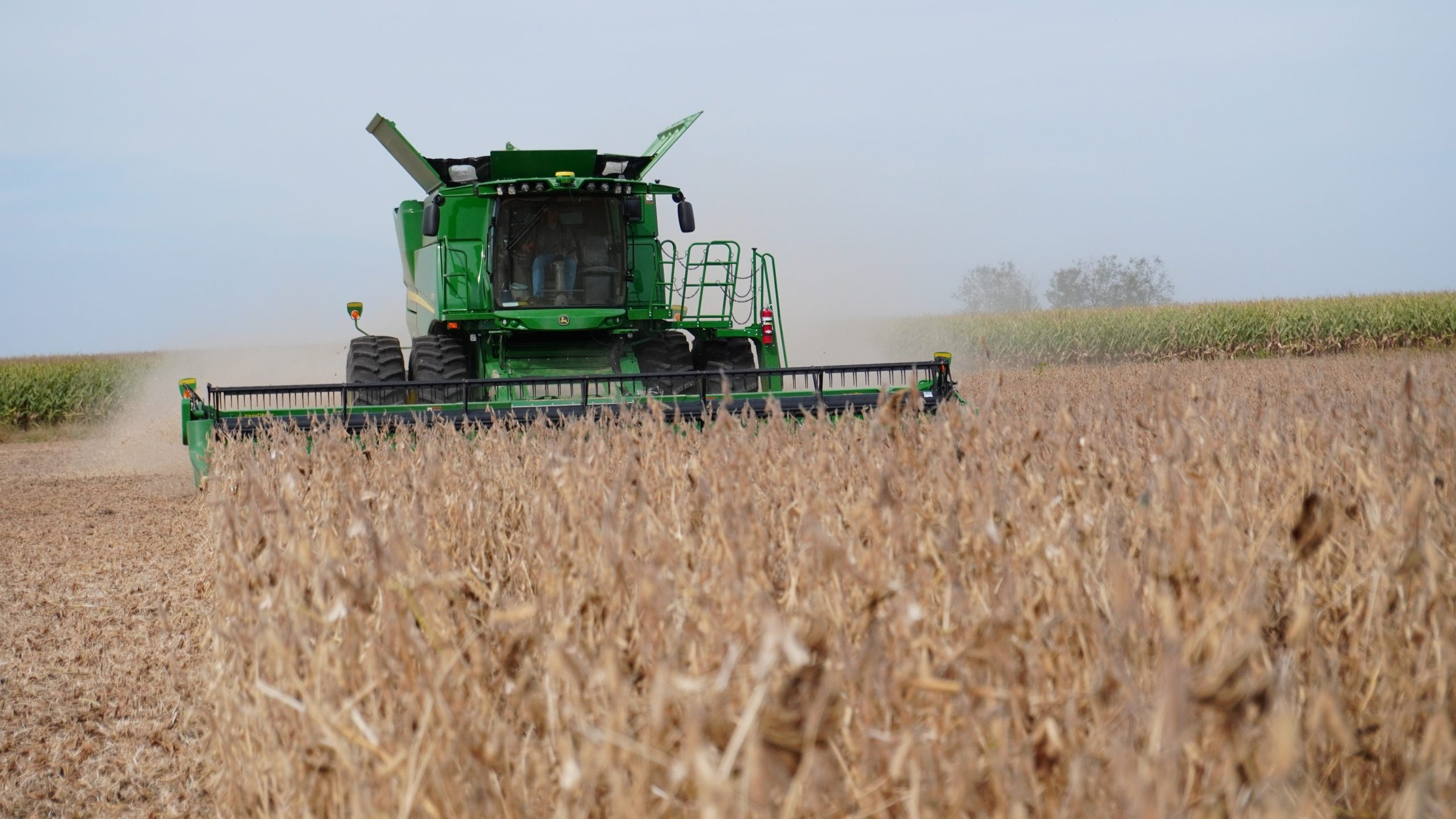
Science for Success evaluated biostimulant seed treatments in over 100 different growing environments across 22 states. Across 100 growing environments in 22 states, there was no product that consistently improved soybean yield compared to the non-treated control.
What is a biostimulant?
In 2018, United States legislators introduced the first legal definition for the term plant biosimulant, defining it as “a substance or microorganism [biological] that, when applied to seeds, plants, or the rhizosphere, stimulates natural processes to enhance or benefit nutrient uptake, nutrient efficiency, tolerance to abiotic stress, or crop quality and yield.”¹ Biostimulant seed treatment products may include one or multiple types of microbes (living microscopic organisms). Some commonly used microbes include Azospirillum, Bacillus, Pseudomonas, Bradyrhizobium, and Trichoderma, which have proposed benefits of enhancing early growth, vigor, and root mass, improved plant nutrient uptake and nitrogen fixation, and increased yield.
Table 1. Commercially available biostimulant seed treatment products evaluated in 2022 and 2023.
| Product Number | Year Tested | Active Ingredient | Marketed Benefits According to Company |
|---|---|---|---|
| 1 | Both | Azospirillum brasilense, Bacillus licheniformis, Bacillus amyloliquefaciens, Bacillus subtillis, Pseudomonas fluorescens, Rhizobium | Enhance early growth, vigor, and root mass |
| 2 | 2022 | Trichoderma virens | No information provided |
| 2 | 2023 | Kosakonia cowaii | Suppress seedling diseases |
| 3 | Both | Bradyrhizobium japonicum | Enhance nitrogen fixation and improve grain yield |
| 4 | 2022 | Bacillus subtillis, Bacillus amyloliquefaciens, Bradyrhizobium japonicum | Protection against fungal root diseases, enhance nitrogen fixation, and improve grain yield |
| 4 | 2023 | Bacillus subtillis, Bradyrhizobium japonicum | Improve plant nutrient uptake, plant growth and resilience, and grain yield |
| 5 | 2023 | Bacillus amyloliquefaciens | Protection against plant parasitic nematodes |
| 6 | 2023 | Methylobacterium hispanicum | Enhance root area, root depth, and root tips, increase nutrient uptake and plant efficiency, and increase yield |
| 7 | Both | Bradyrhizobium elkanii, Delftia acidovorans, Bacillus velezensis | Increase crop establishment, improve root vigor and plant growth, solubilize phosphorus from organic and inorganic reservoirs, and increase grain yield |
| 8 | Both | Bacillus velezensis | Increase crop establishment, improve root vigor and plant growth, solubilize phosphorus from organic and inorganic reservoirs, and increase grain yield |
| 9 | Both | Glomus intraradices, Glomus mosseae, Glomus aggregatum, Glomus etunicatum | Improve plant vigor, enhance water and nutrient absorption, enhance phosphorus uptake |
Why study biostimulant seed treatments?
Although there are benefits associated with biostimulant seed treatments, most of the published efficacy research was conducted in a laboratory or greenhouse environment, and previous field studies were regional in scope.
In 2022 and 2023, the Science for Success team worked together to evaluate several commercially available biostimulant seed treatments in field settings in over 100 environments across 22 states (Figure 1). The full treatment list is shown in Table 1.
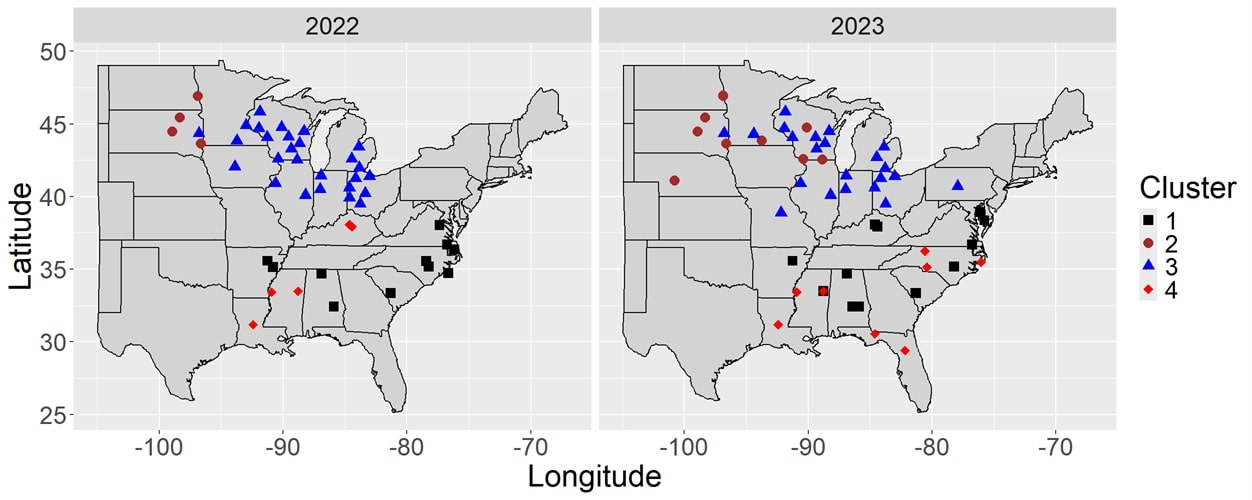
Research Goal: Evaluate the effectiveness of commercially available products over a large set of growing environments and field settings
Biostimulant seed treatments were applied to soybean seed previously treated with a commercially available fungicide and insecticide seed treatment. Great care was taken to ensure all biostimulant seed treatments were compatible with fungicide and insecticide treatments and product handling and application guidelines were followed according to each company’s instructions. Biostimulant seed treatment products were compared to a non-treated control (soybean seed treated with fungicide and insecticide only).
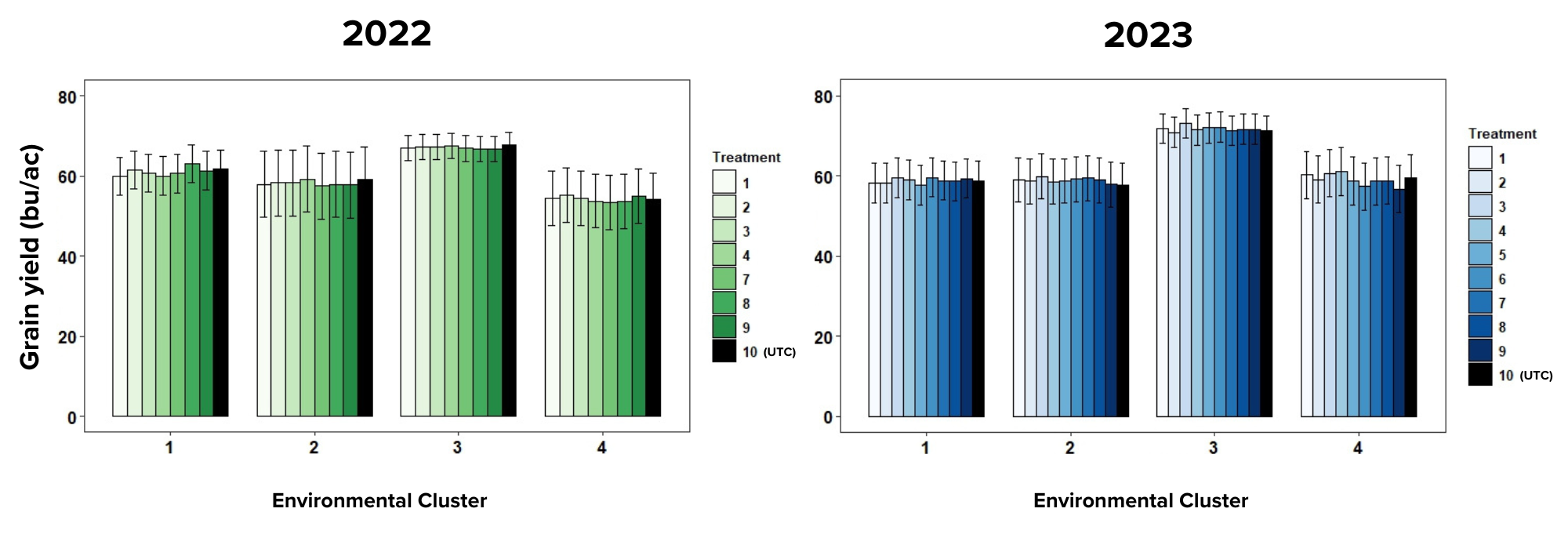
Research Findings: The biostimulant seed treatments did not influence soybean yield. Among the tested biostimulant seed treatments, none of the products consistently improved soybean yield compared to the nontreated control (Figure 2).
Why was there a lack of yield response?
We have a few hypotheses about why biostimulant seed treatments had no positive yield response:
1) Conditions may not have been adequate for a successful symbiotic relationship between the microbe and soybean plant.
For a symbiotic relationship to occur, three conditions must be present at the same time: soybean plant, plant-beneficial microbe, and a conducive environment (Figure 3). If all of these factors don’t exist at the same time, there will not be a symbiotic relationship between the microbe and plant.

2) The microbe may not have been alive.
In the case of biostimulant seed treatments, not only does the microbe need to be present, but it also needs to be applied on the seed at a high concentration and be alive.
3) The microbe may not have been able to outcompete the native microbial population in the soil.
One teaspoon of soil may contain 1 billion individual microscopic cells. This is three times the number of people in the entire United States! Microbes introduced as part of a seed treatment need to outcompete and survive among the native populations of microbes within the soil.
Key Reminders
- Although our research showed that no product consistently improved soybean yield, there are many products available on the market, and we were only able to test a subset of the commercially available products.
- Companies are investing significant resources in new products and new application methods. If a farmer chooses to use a biostimulant seed treatment, it is extremely important they follow handling and application guidelines provided by the company.
- If possible, farmers should work with their university Extension system to test products on-farm.
References
1. Agricultural Improvement Act, Sec. 10111 (2018). https://www.congress.gov/115/bills/hr2/BILLS-115hr2enr.pdf
Authors:
Laura Lindsey & Fabiano Colet, The Ohio State University. February 2025.
Additional Authors: Eros Francisco, Auburn University; Shaun Casteel, Purdue University; David Moseley, Louisiana State University; Trent Irby & Michael Mulvaney, Mississippi State University; Hans Kandel, North Dakota State University; Jeremy Ross, University of Arkansas; Mark Licht, Iowa State University; Nicole Fiorellino, University of Maryland; Andre Borja Reis, University of Missouri; Daniela Carrijo, Penn State University; Michael Plumblee, Clemson University; Emma Matcham, University of Florida; Chad D. Lee, University of Kentucky; Maninder Singh, Michigan State University; Nicolas Cafaro La Menza, University of Nebraska-Lincoln; Jonathan Kleinjan, South Dakota State University; Emerson Nafziger & Giovani P. Fontes, University of Illinois Urbana-Champaign; Seth Naeve, University of Minnesota; Rachel Vann, North Carolina State University; David Holshouser, Virginia Tech; Shawn Conley & Spyros Mourtzinis, University of Wisconsin-Madison.