Issues with Splitting Pods and Sprouting Seeds in Soybeans
Reports of pod splitting and/or seed sprouting in the soybean pod have increased in several states in the past few years (examples in Lindsey et al., 2025). These issues are typically caused by stressful environmental conditions as soybean plants approach maturity.
Causes of Pod Splitting & Seed Sprouting
Under ideal conditions the number of split pods and sprouted seed is low, with limited impact on seed yield and quality. While there isn’t a definitive cause of pod splitting and seed sprouting, reports in recent years have coincided with stressful conditions such as drought followed by extremely wet periods late in the season.
Soybean plants determine how many pods, how many seeds, and how large seeds are during the reproductive stages. Stressful conditions during critical developmental stages can lead to flower and pod abscission, and later seed abortion.
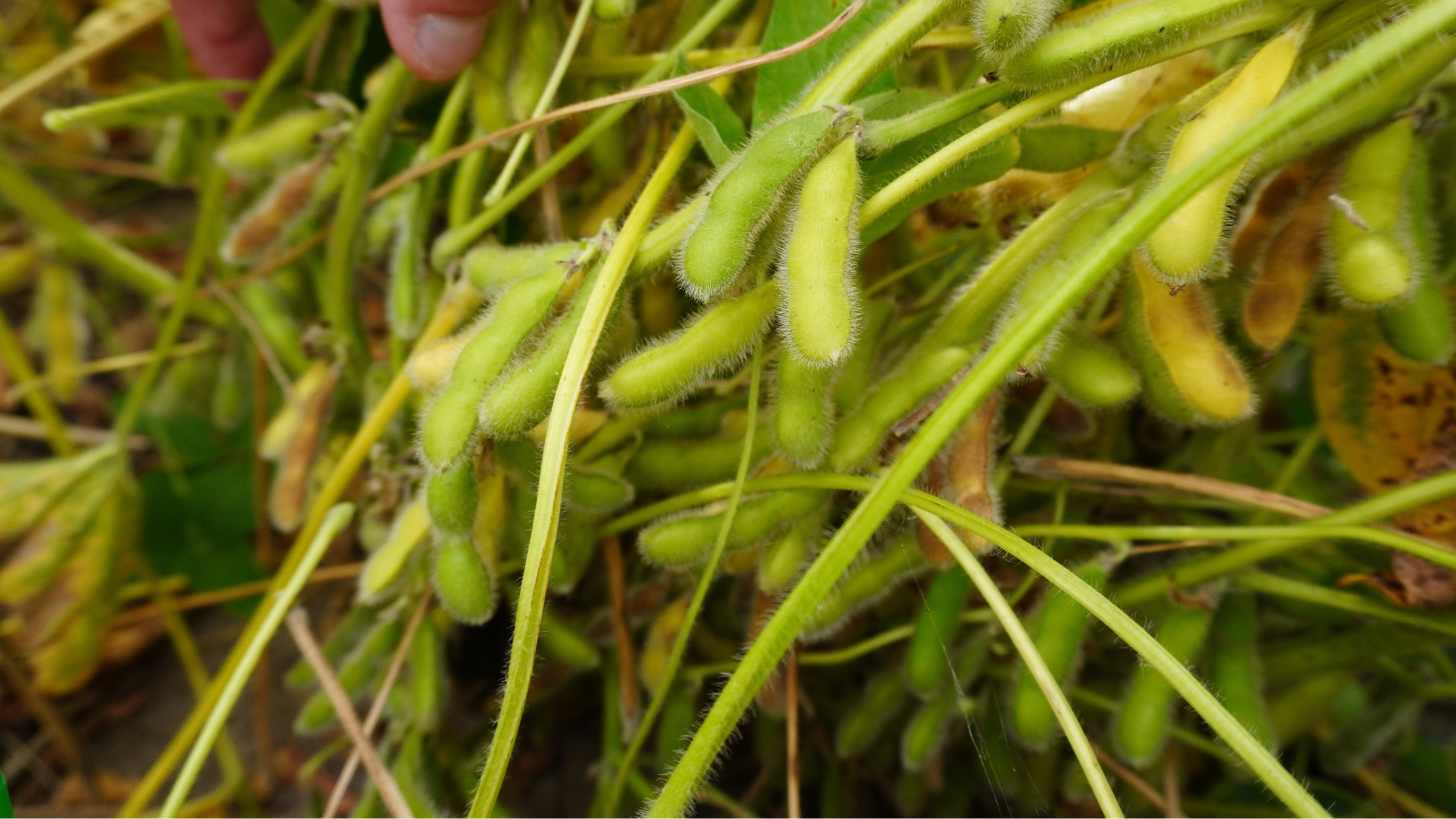
Figure 1A. A green soybean pod that has split open.
Figure 1B. Several green soybean pods that have split open.
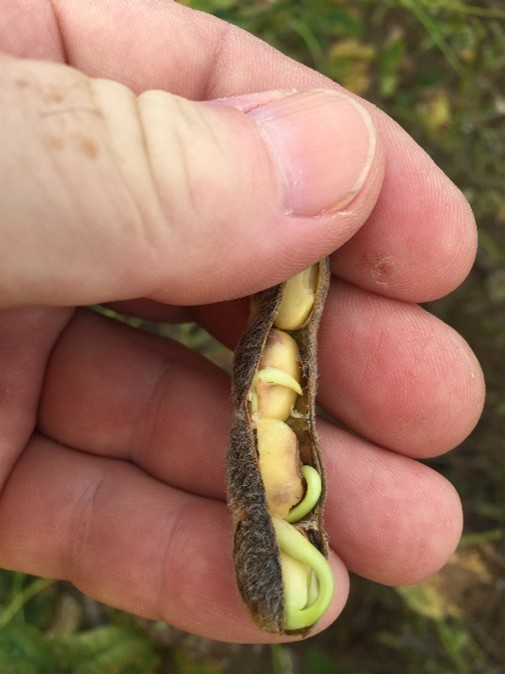
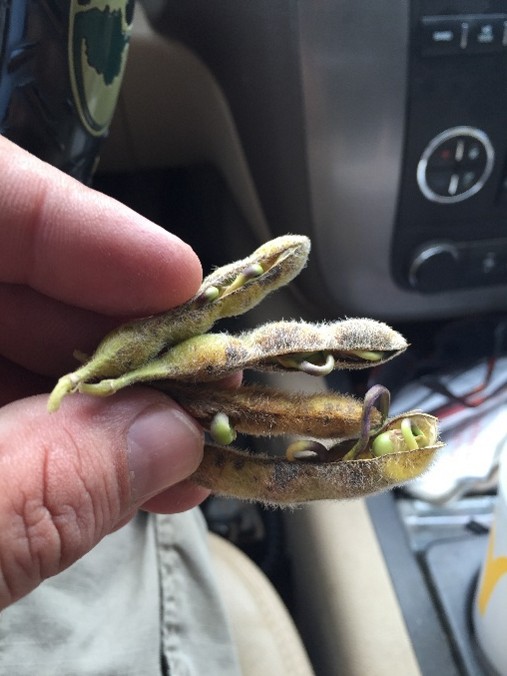
Pod splitting (Figure 1) is most common when pods develop and the seeds begin to expand during stressful conditions, like drought, and then seeds finish filling under very wet conditions. Wet conditions during seed development can lead to the seeds expanding quickly, causing the pods to split and expose the developing seed. Seed sprouting (Figure 2) is usually caused by extremely wet conditions after a crop is mature and seed moisture has dropped below 50%. However, there have been reports of seed sprouting around the completion of seed fill (R6).
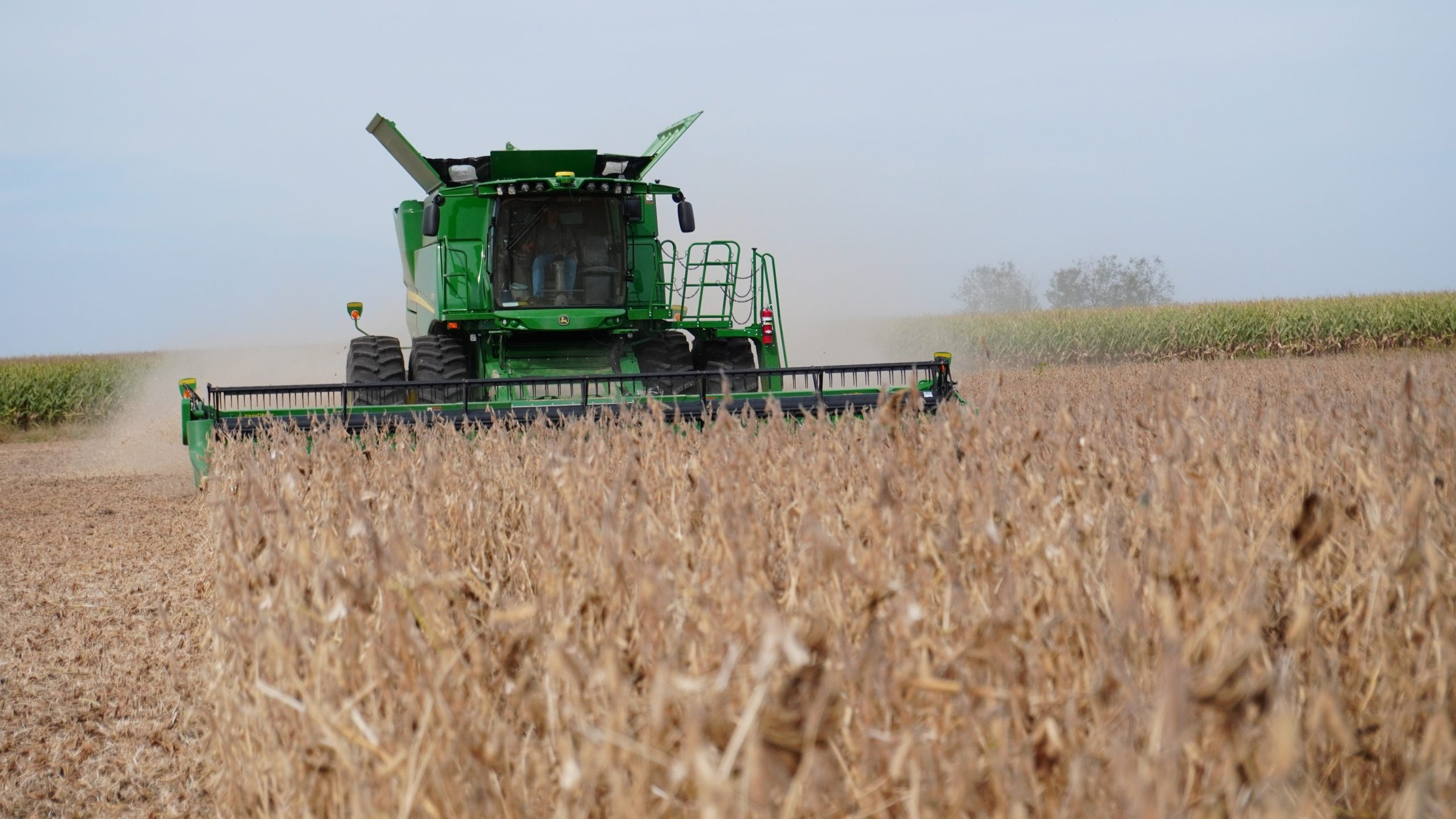
Once conditions begin to dry, developing or sprouting seed will dry out and may fall out of the pods. These conditions may lead to lower test weight, reduced seed quality, or an increase in foreign materials. If this is the case, adjustments to combine settings can help remove light, sprouted seed at harvest.
Figure 2A. Soybean seeds that have sprouted in the pod.
Figure 2B.Soybean seeds that have sprouted in the pods.
Preventing Harvest Issues
Unfortunately, there isn’t much that can be done to prevent issues of pod splitting and seed sprouting. When possible, a timely harvest before extreme weather conditions is the best way to reduce damage (Lindsey et al., 2025). Using a fungicide isn’t recommended, as these issues are not typically caused by pathogens. University research trials show no positive benefit from a fungicide to protect seed/pod quality at late-reproductive stages of growth (R5+) and there is no evidence of any benefit from a fungicide at R6. However, scouting fields for pests is critical as the season progresses to ensure timely management. Pod rots like anthracnose are common late-season diseases. They can be identified with a hand lens as dark “mini-spines” (setae) in concentric rings on pods. Other opportunistic, saprophytic fungi are often found on these brown, discolored pods. These are more common on mature plants during conditions of prolonged wet, cloudy weather.
Lindsey, L. E., Lopez‐Nicora, H. D., Lindsey, A. J., Francisco, E. A., Lee, C. D., Matcham, E. G., Moseley, D., Ortel, C. C., Plumblee, M. T., Preza Fontes, G., Reis, A. F. B., Ross, J., Vann, R. A., & Ortmeier‐Clarke, H. J. (2025). Effect of Hurricane Helene on US soybean production. Crop, Forage & Turfgrass Management, 11(2), https://doi.org/10.1002/cft2.70060