Key Points
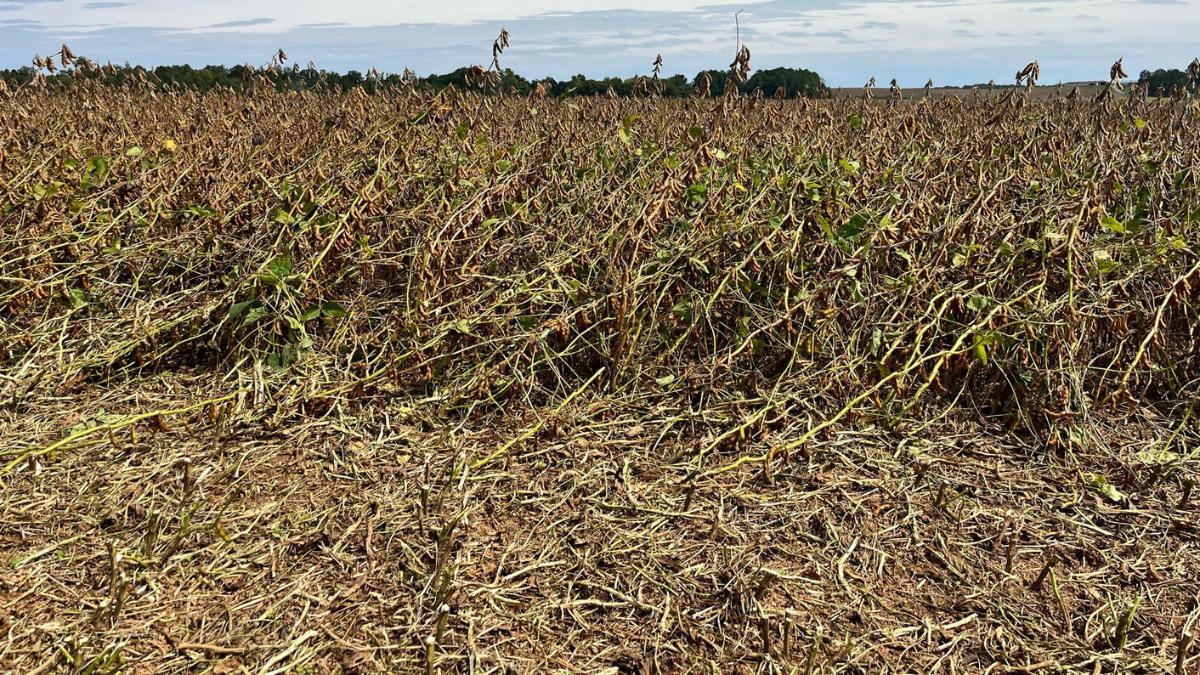
- More purple seed stain than usual is being observed across the Midwest in 2026 due to warm and wet temperatures during seed development.
- Fungicide applications during reproductive development have minimal practical impact on purple seed stain incidence and severity.
- Purple seed stain may be graded as its own category. Resulting dockage is variable depending on region and end-market .
- The pathogen that causes purple seed stain is not known to cause toxicity issues for livestock consumption.
Reports of purple seed stain (caused by Cercospora spp.) are increasing across the upper Midwest (Figure 1) despite there being lack of foliar disease symptoms in many cases. This issue is common in the Southeast and Mid-South USA with wide ranges in quantified issues ranging from a few percent to >20% (Figure 2). These issues are typically driven by wet and hot weather during seed development.1
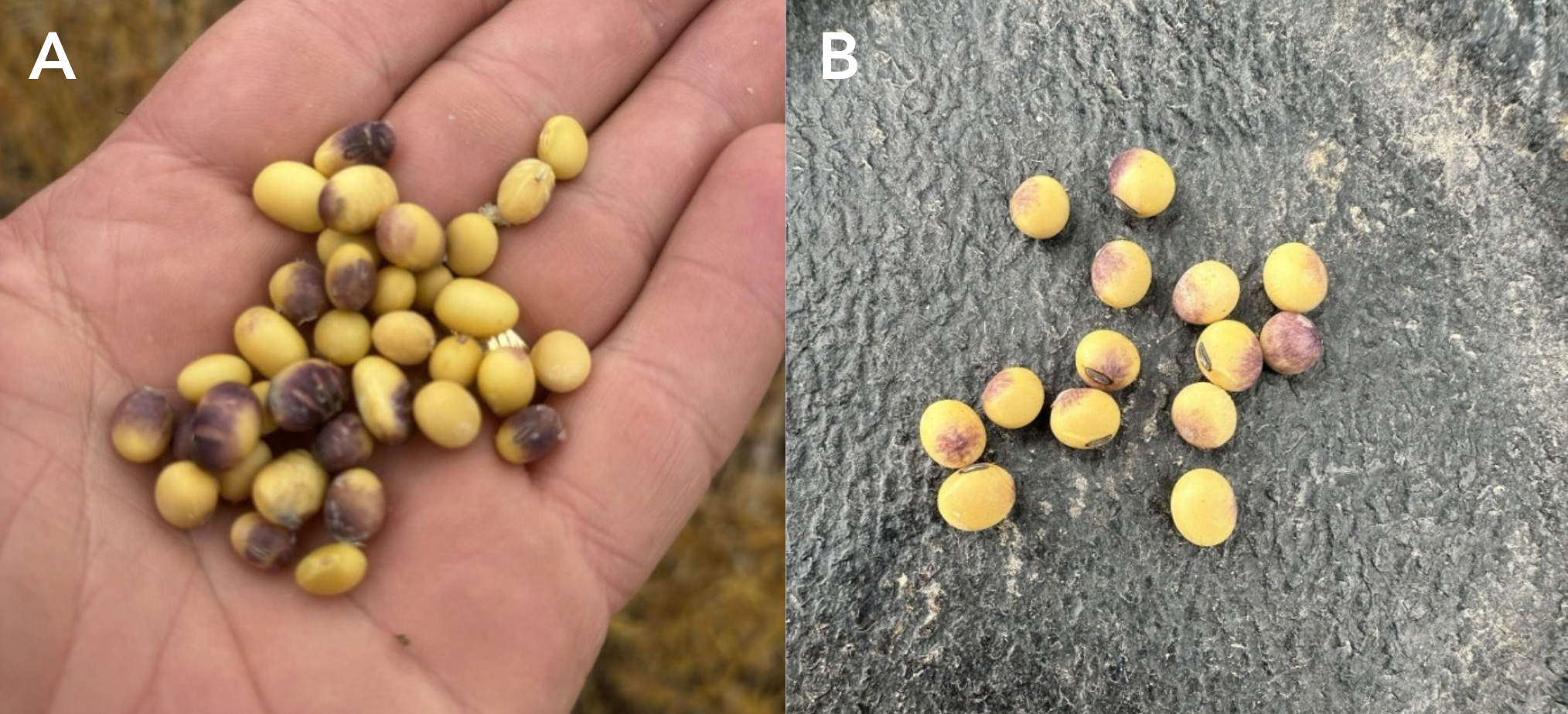
Figure 1. Purple seed stain observed in 2026 in Wisconsin (A, Credit: Shawn Conley) and Michigan (B, Credit: Manni Singh).
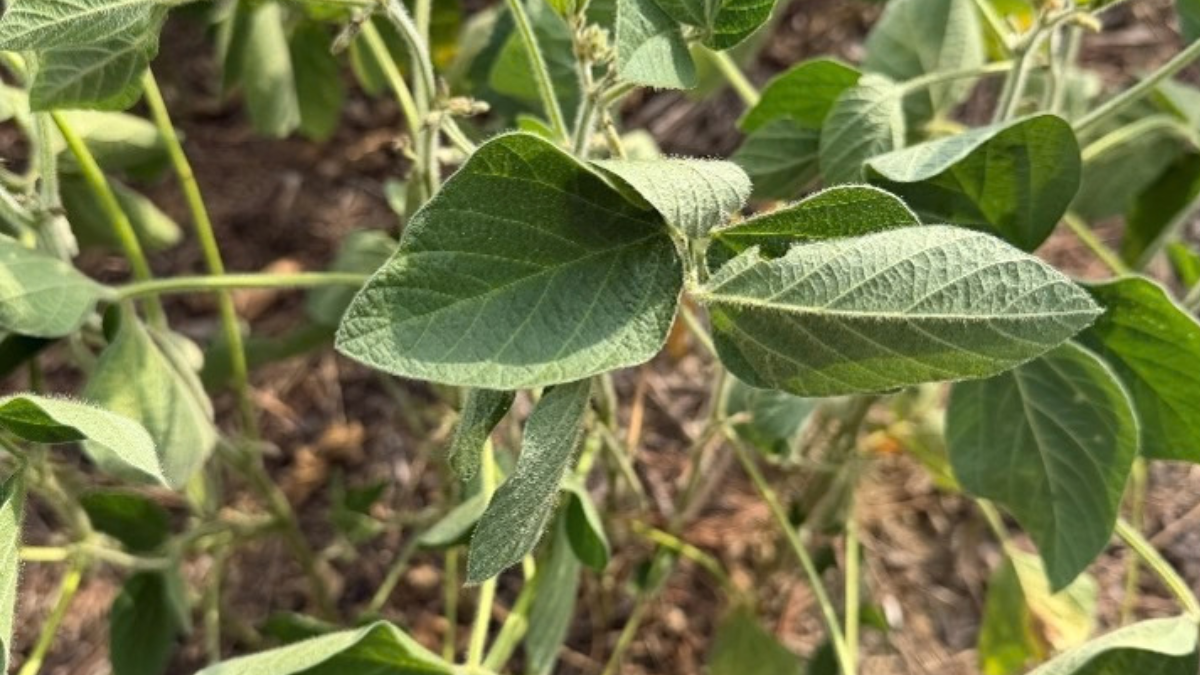
Previous research has shown that purple seed stain and Cercospora leaf blight are not correlated.1,2 Given the lack of leaf symptoms observed in many cases in 2026, purple seed stain likely has minimal impact on soybean yield. Previous work has also shown minimal practical impact of using foliar fungicide applications during reproductive development to reduce purple seed stain.3
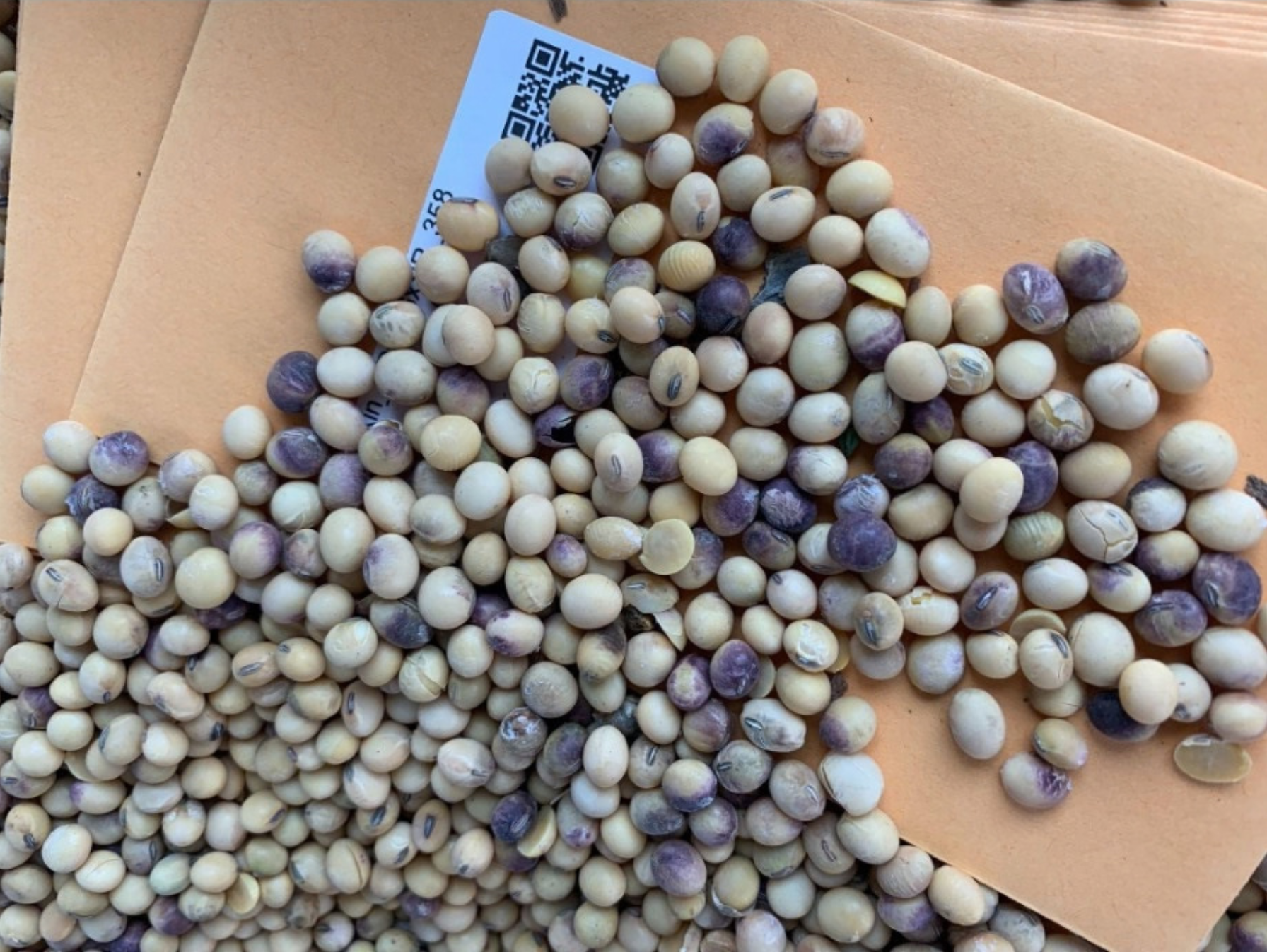
Figure 2. A previous case of severe purple seed stain observed in the Southeast USA. Credit: Rachel Vann
According to official USDA-FGIS grain grading standards4, purple mottled or stained seed resulting from fungal infections by Cercospora may result in a special grade and may lead to a reduction in class, down to US No. 3 in extreme cases. Although seed composition may not be significantly affected, dockage may vary based on end use for the seed. Soybeans destined for food markets where visual quality is a priority are likely to be docked or rejected entirely. The pathogen that causes purple seed stain is not known to cause toxicity issues for livestock consumption.5
Other soybean seed quality issues have also been emerging in the Midwest in 2026 (e.g., Diaporthe formerly Phomopsis), which can further deteriorate soybean seeds if harvest is delayed.6,7 Wet weather during seed maturation has also been noted to cause germination in the pods this year.
Authors:
Seth Naeve, University of Minnesota, Shaun Casteel, Purdue University, Shawn Conley, University of Wisconsin–Madison, Jeremy Ross, University of Arkansas, David Moseley, Louisiana State University, Rachel Vann, University of Illinois Urbana-Champaign
References:
1Moseley, D., Amie, J., Ramos, S., Price, T., Padgett, B., Lin, F., Vieira, C., Reis, A., Fic, K., Allen, T. W., Doyle, V., Argenta, J., da Silva, E., & Thomas-Sharma, S. (2026). Identifying and managing Cercospora leaf blight in soybean: From scouting to best management practices. Crop, Forage & Turfgrass Management, 12(1), e70098 https://doi.org/10.1002/cft2.70098
2Crop Protection Network. (2018, January 1). Purple Seed Stain of Soybeans. https://cropprotectionnetwork.org/encyclopedia/purple-seed-stain-of-soybean
3O’Reilly, K., Vann, R. A., Collins, G. D., Lux, L. R., Stokes, D. R., & Reisig, D. D. (2025). Mid-season pest management implications for protecting soybean seed quality in North Carolina. Agronomy Journal, 117(2), e70033. https://doi.org/10.1002/agj2.70033
4Federal Grain Inspection Service. (2020). Grain Inspection Handbook, Book II: Grain Grading Procedures. United States Department of Agriculture. https://www.ams.usda.gov/sites/default/files/media/Book2.pdf.
5Ward, S. & Vaughan, S. A. R. (2026). Guide to Mycotoxins Commonly Found in Animal Feeds. NC State Extension. https://content.ces.ncsu.edu/guide-to-mycotoxins-commonly-found-in-animal-feeds
6Tenuta, A., Bradley, C., Chilvers, M., Giesler, L., Mathew, F., Mueller, D., Sisson, A., Smith, D., & Wise, K. (2016). Scouting for Soybean Seed Diseases. Crop Protection Network. doi.org/10.31274/cpn-20190620-018
7Crop Protection Network. (2018, January 1). Diaporthe Seed Decay of Soybean. https://cropprotectionnetwork.org/encyclopedia/phomopsis-seed-decay-of-soybean