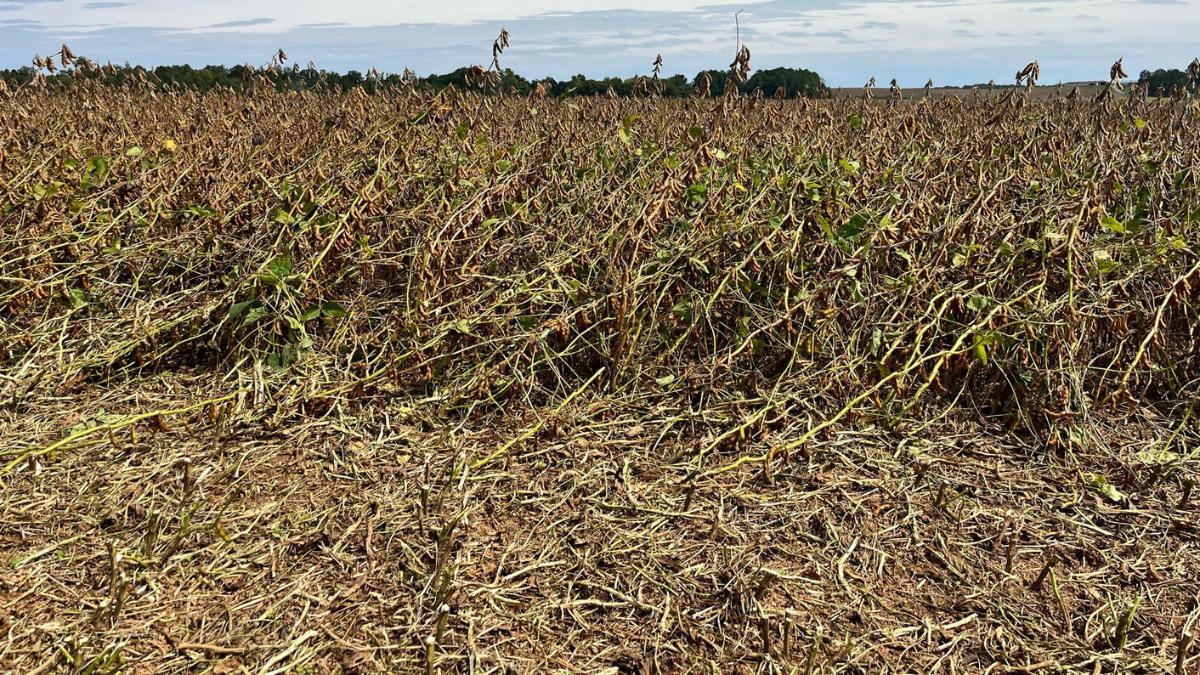
As the US soybean harvest progresses, independent reports of seed quality problems are rising across the country. Specific problems vary by region and sample, though multiple issues are co-occurring in certain areas (Figure 1). Although the Federal Grain Inspection Service (FGIS) maintains standard definitions for soybean classes (yellow or mixed)1 and grades them on specific factors,2 reports indicate significant variation in how soybeans are currently being classified, graded, and docked in 2026.

Figure 1. 2026 soybean sample from Iowa showcasing a variety of seed quality problems that include soybeans of other color, purple seed stain, green seed, and Diaporthe seed decay.
It is important to understand which problems are present, their associated implications (if any), and how they fit into FGIS standards for soybean. Some examples of seed quality problems arising in 2026 include purple seed stain, Diaporthe seed decay, soybeans of other colors (SBOC), and more (Figure 2).
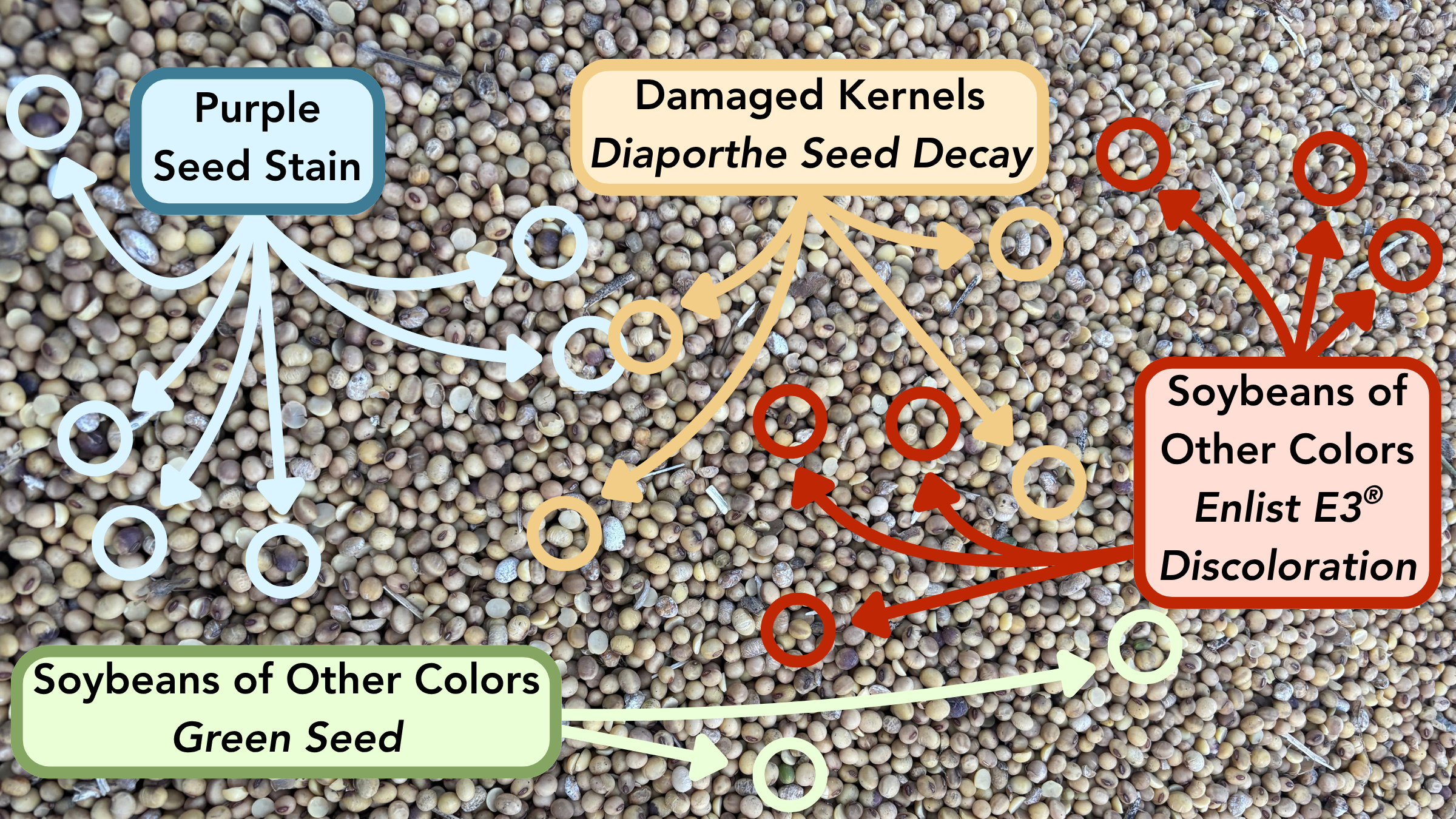
Figure 2. Soybean sample from 2026 showcasing co-occurring seed quality problems, including purple seed stain (in blue), Diaporthe seed decay (in beige), Enlist E3® discoloration (in red), and green seed (in green).
FGIS Definitions
FGIS maintains definitions for two classes of soybeans, yellow and mixed.2 Samples are classified as mixed if they do not meet the definition for yellow soybeans.1 Current FGIS standards define yellow soybeans as
“Soybeans that have yellow or green seed coats and which, in cross section, are yellow or have a yellow tinge, and may include not more than 10.0 percent of soybeans of other colors.”1
Current FGIS standards further define soybeans of other colors as
“Soybeans of other colors are soybeans that have black or bicolored seedcoats, as well as soybeans that have green seedcoats and are green in cross section. Bicolored soybeans will have seed coats of two colors, one of which is brown or black, and the brown or black color covers 50 percent of the seed coats. The hilum of a soybean is not considered a part of the seed coat for this determination.”1
After classification, soybean is then split into four grades based on a maximum percentage of damaged kernels, foreign material, and splits.2 Current FGIS standards define damaged kernels as
“Soybeans and pieces of soybeans that are badly ground- damaged, badly weather-damaged, diseased, frost-damaged, germ-damaged, heat- damaged, insect-bored, mold-damaged, sprout-damaged, stinkbug-stung, or otherwise materially damaged. Stinkbug-stung kernels are considered damaged kernels at the rate of one-fourth of the actual percentage of the stung kernels.”1
Special grades may be given for some circumstances, such as purple mottled or stained seed. Current FGIS standards define purple mottled or stained seed are as
“Soybeans that are discolored by the growth of a fungus; or by dirt; or by a dirt-like substance(s) including nontoxic inoculants; or by other nontoxic substances.”1
While FGIS issued a final rule in September 2023 removing SBOC as a distinct grading factor,3 SBOC is still a consideration for classification as yellow, and not mixed, soybeans.4 Current FGIS standards treat soybeans of other colors and discoloration due to other factors, like purple seed stain, as separate issues.
Please note, this article outlines the seed quality problems we are receiving reports on. For the full list of grain grading procedures, please refer to the FGIS grading standards linked here.
Prevalent Seed Quality Problems in 2026
Soybeans of Other Colors (SBOC)
Soybean seed coat colors do have some natural variation, but it is typically minimal and depends on many factors, such as geographic location, weather, year, and seed position on the plant. We have received reports on two distinct problems that fall under the broader umbrella of SBOC or seed coat discoloration, discoloration in Enlist E3® soybean varieties and green seed.
Discoloration in Enlist E3® Soybean Varieties
One specific scenario resulting in deviation from the standard seed coat color is with Enlist E3® soybean varieties (contain tolerances to three herbicides: 2,4-D choline, glyphosate, and glufosinate).5-8 Harvested seed from these varieties sometimes exhibit a dark discoloration of the seed coat. The seed coat will appear to have light brown or grey striping, banding, or shading around the hilum, covering some or all of the seed (Figure 3). Discoloration with Enlist E3® soybean varieties was initially classified as SBOC, and has since been widely known by the abbreviation. We use SBOC to label this problem due to its familiarity and common use, but it is important to note that the SBOC umbrella also contains other forms of discoloration as well.2

Figure 3. Examples of soybeans of other colors from Enlist E3® soybean varieties with hilum banding or general discoloration in a soybean sample from 2026.
This type of discoloration is due to an accumulation of iron-chelating phenolics, primarily the isoflavone genistein.9 These phenolics appear to be localized in the seed coat and are considered to be nutritionally neutral to even positive. USDA researchers found no difference in protein and oil among soybeans expressing this trait within SBOC seed lots.10 Subsequently, researchers have not found compositional differences between the cotyledons of SBOC seeds and those without this visual trait.9,10 Therefore, it is assumed that SBOC are functionally equivalent to ‘normal’ seeds.
SBOC in Enlist E3® soybean varieties is reported to be more widespread in 2026 than in previous years and in some cases is the only soybean seed quality problem observed. This is likely due to environmental conditions favoring the expression of the Enlist E3® trait that results in discoloration. This problem first emerged in 2021 and was more widespread in 2022, becoming somewhat more localized in years since. As adoption of this trait platform grows in the U.S., commercial grain handling has witnessed a sharp rise in seed coat discoloration. The average % SBOC in certified grain samples rose dramatically from the 10 year average of 0.03% to 0.27% in 2021 and 0.71% in 2022.11,12 The percent of certified grain samples exceeding the criteria for #1 yellow soybeans averaged ~0.42% from 2011-2020, but jumped to 7.81% in 2021 and almost tripled to 22.06% in 2022.11,12 Effective September 1, 2023, FGIS removed the SBOC components of the grading standards for soybeans.2 However, as noted before, maximum SBOC remains in the definition of yellow soybeans as a class.1
Green Soybean Seed
Another type of SBOC we are receiving reports of is green soybean seeds (Figure 4). This occurs when chlorophyll fails to break down during maturation due to a lack of the enzyme chlorophyllase.13,14 Hot, dry weather during the seed-fill period can disrupt normal physiological processes and trigger this disorder, as can an early frost or freeze before the crop matures.14 Unlike immature seeds, which resemble green kidney beans and can ripen in the bin, these seeds are fully mature and will permanently remain green.15 Soybean seed that remains green can impact oil quality and should not be used as seed, as seed vigor is reduced.16

Figure 4. Examples of green seeds classified as soybeans of other colors in a soybean sample from 2026.
SBOC Implications
Our team has received increased reports of SBOC occurrence, with some reports of dockage or rejected loads at grain terminals. Reports on dockage amount and frequency are varied and appear to be geographically specific. At the time of publication, it is not clear if any dockage is due to soybeans being downgraded from yellow to mixed soybeans due to increased SBOC, other quality problems, or if receivers are not following the latest soybean grading standard from FGIS. It is possible that the combination of several quality problems (SBOC, purple seed stain, and/or other damage) is leading purchasers to classify heavily mottled or damaged soybean samples as mixed, rather than yellow, before grading even happens. It is also unclear how crop insurance will handle any dockage, and will likely depend on why the dockage occurred.
Some export markets are especially sensitive to SBOC, regardless of FGIS class or grade. Soybean is the #1 US export to Indonesia, with a 10-year average value of $1.05 billion USD annually.17 The US supplies ~85-89% of Indonesia’s total soybean imports annually.18,19 Nearly all of these soybeans make their way into the food market through tempeh production.18 Tempeh is made from whole soybeans, and tempeh producers require clean, yellow soybeans.18 In these markets, the presence of SBOC will result in rejection of shipments and will ultimately lead to lower prices paid to US soybean farmers.
Damaged Soybean Seed
We have received reports on two distinct problems that fall under the broader umbrella of damaged kernels, Diaporthe seed decay and seed coat cracking.
Diaporthe Seed Decay
Diaporthe longicolla and other fungi in the Diaporthe genus cause both pod and stem blight and Diaporthe seed decay (formerly Phomopsis).20,21,22 Pod and stem blight often damages maturing plants and can result in premature death. Diaporthe infected seeds often appear wrinkled, cracked, and covered in a chalky, white mold (Figure 5).20 If infected grain is planted, reduced germination is expected as a result of seed rot or seedling blight.20 Both diseases can occur when susceptible varieties are planted and there is greater than normal rainfall during the pod-filling growth stages.

Figure 5. Examples of damaged soybean seeds due to Diaporthe seed decay in a soybean sample from 2026.
Seed Coat Cracking
Seed coat cracking has also shown up in 2026 in some areas due to excessive water during seed fill (Figure 6). Ample or excessive rain and/or soil moisture during seed fill (R5-R6) can cause the seed coat to rupture. The interior seed components swell and/or accumulate more constituents than the seed coat can contain, which can lead to cracking often radially from the hilum.23 A high percentage of this seed coat cracking could cause issues with seed quality during storage.24 It is not to be confused with seed coat cracking that can result from Diaporthe seed decay.
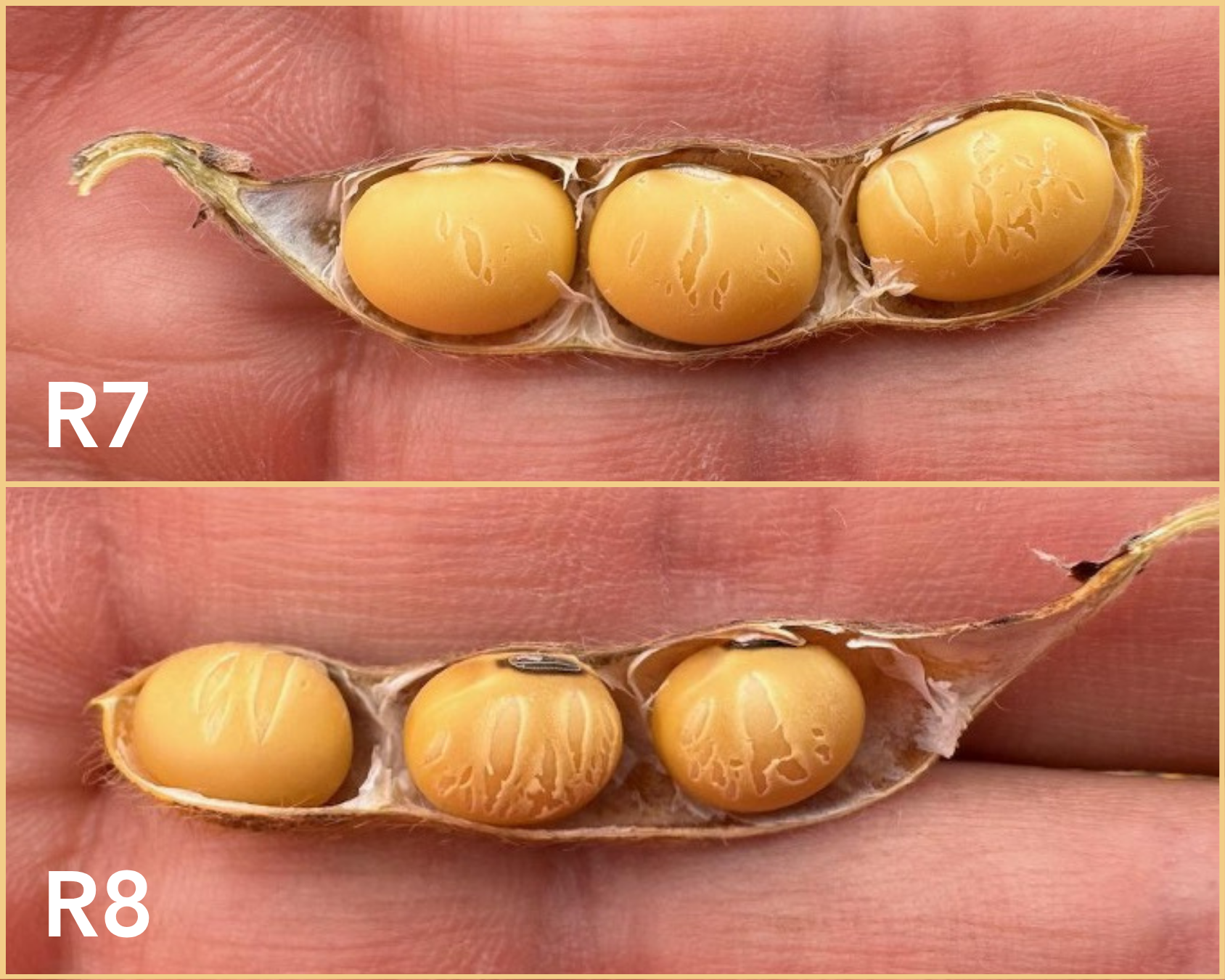
Figure 6. Example of seed coat cracking at the R7 (top) and R8 (bottom) growth stage, a form of weather damage. This type of seed coat cracking in soybean is due to excess water during seed fill that physiologically ruptured the seed coat and is not due to a pathogen.
Special Grade – Purple Seed Stain
Purple seed stain (caused by Cercospora flagellaris and other Cercospora species25) is a common issue in the Southeast and Mid-South US. Infected seeds will have purple spots (Figure 7), but can also be asymptomatic.25 The amount of seed covered ranges greatly from very few to greater than 20%, but typically does not exceed a few percent.26 Incidence is typically driven by wet and/or hot weather during seed development. Previous research has shown that incidence of purple seed stain and Cercospora leaf blight are not correlated.25,27 Without prevalent reports of leaf symptoms, purple seed stain will likely have minimal impact on yield this year.28 Previous work has also shown minimal practical impact of using foliar fungicide applications during reproductive development to reduce purple seed stain.26 For more information, please reference the Science for Success web blog on purple seed stain linked here.

Figure 7. Examples of purple seed stain in a soybean sample from 2026.
Under current FGIS standards, a special grade of “purple mottled or stained” can be given when sufficient amounts of discolored seeds are found based on the general appearance of the sample.2 Samples with special grades, like in instances of purple seed stain, can be downgraded. Although seed composition is likely not affected, dockage may vary based on the end use for the seed. Soybean destined for food markets where visual quality is a priority are likely to be docked or rejected entirely. The pathogen that causes purple seed stain is not known to cause toxicity issues for livestock consumption.29
Because it is not clear exactly what problem is leading to dockage at grain terminals in 2026, it is possible that incidence of purple seed stain is being combined with that of other quality problems. Receivers could be grouping issues together, resulting in classification as mixed (not yellow) soybeans, they could be adjusting the grade based on purple seed stain alone, or there could be other factors at play.
Bottom Line for 2026
Proactively talk to your buyer about potential seed quality problems. Understanding how they determine dockage and end markets can help you know what to expect when delivering 2026 grain to the terminal. The amount of dockage and potential rejection may depend heavily on whether the terminal feeds into crush or export channels. If you can shop around for different purchasers this may be a good year to do so.
While there isn’t any action you can take to reduce the seed quality problems outlined here after harvest, understanding how and why you may see dockage at the elevator can help you prepare and plan.
Authors
Shaun Casteel, Purdue University, Shawn Conley, University of Wisconsin–Madison; Seth Naeve, University of Minnesota; Carrie Ortel, Virginia Tech; Haleigh Ortmeier-Clarke, University of Illinois Urbana-Champaign; Rachel Vann, University of Illinois Urbana-Champaign
Published October 16, 2026