Key Points:
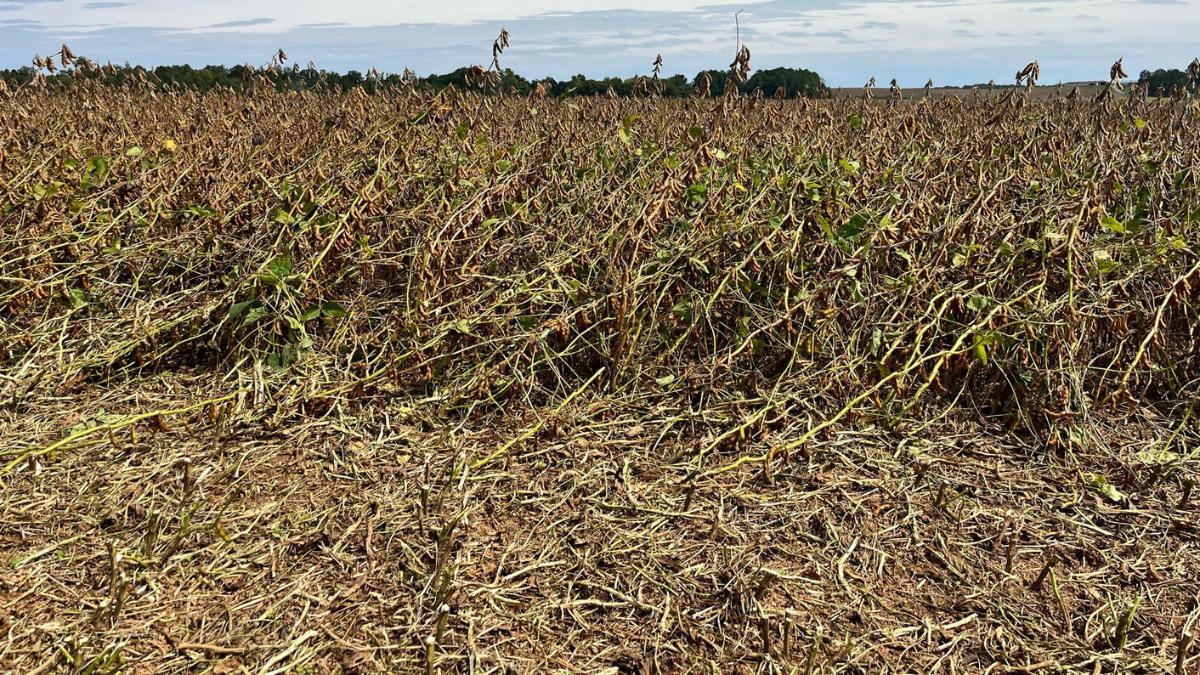
- Soybean tolerate far more leaf loss in vegetative stages than after flowering; the same percentage of defoliation is much costlier once plants reach R3 – R6.
- Late-season defoliation comes from three main sources: chewing insects, foliar diseases, and abiotic stress (hail, herbicide injury, etc.). Identifying the true cause is important for determining management and response.
- Most people overestimate defoliation by eye; getting accurate defoliation estimates prevents unnecessary and sometimes costly responses.
Walk a soybean field in early August and you’ll almost always find some chewed up leaves. Most of the time, that’s nothing to worry about. But defoliation that shows up after flowering behaves very differently than the same damage earlier in the season. Knowing when to act, and when to leave the sprayer parked, can save real money.
Late season defoliation refers to leaf loss during the reproductive stages, roughly when the plant is setting pods (R3-R4) and filling seed (R5-R6). The key thing to understand is that timing matters more than the percentage of leaf area lost. A field that loses 20% of its canopy at full flowering (R2) may have barely any yield loss. Yet the same percentage of loss during pod fill (R3-R4) can have a meaningful yield loss, since soybean tolerance drops sharply once flowering begins.1
Research shows that yield loss from defoliation is also driven by how much leaf damage reduces light interception. Soybeans can lose a surprising amount of leaf area without sacrificing yield if the canopy still captures roughly 90% of incoming sunlight.1
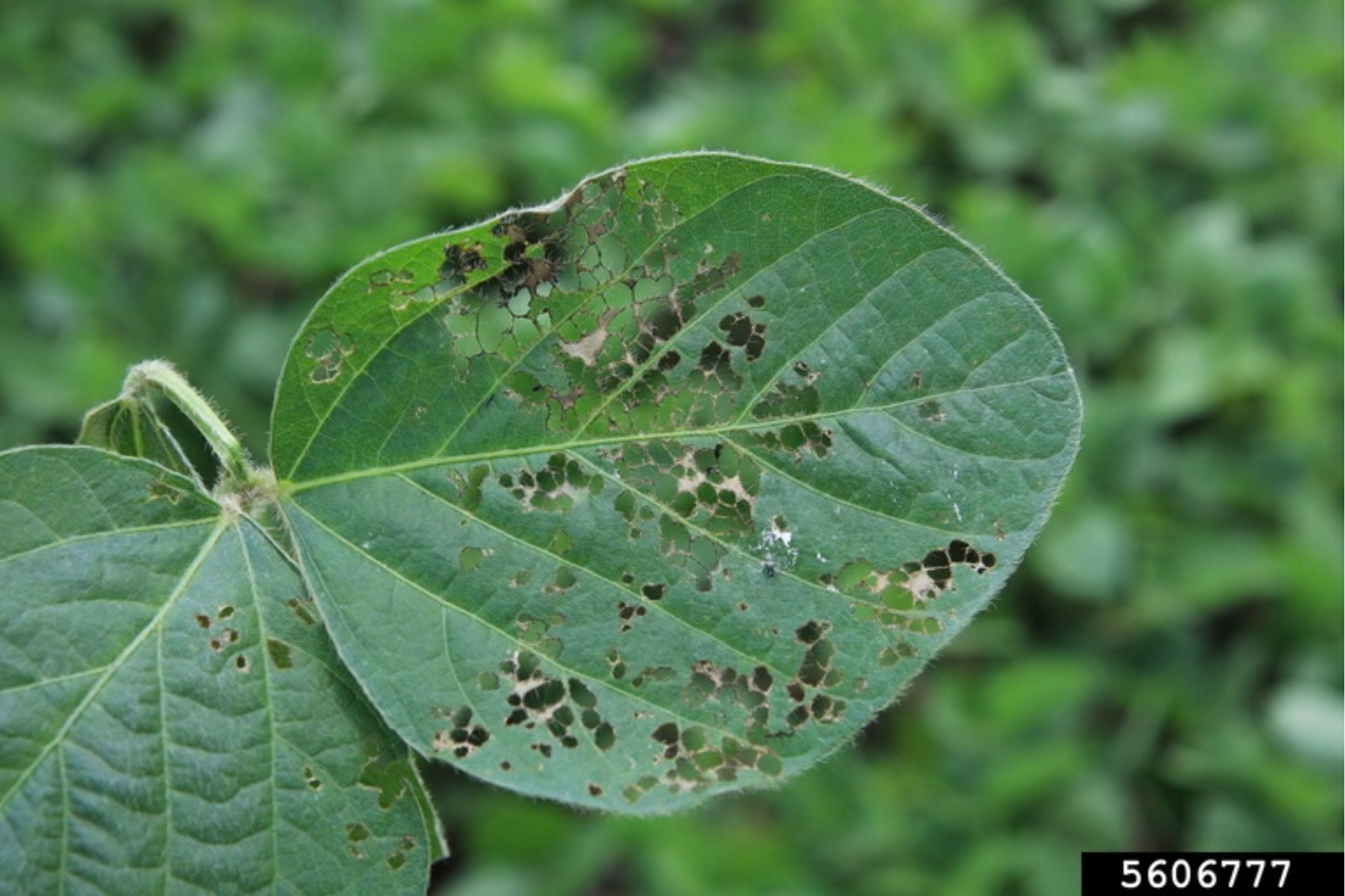
Figure 1. Defoliation on a soybean leaf due to bean leaf beetle feeding. Photo: Gerald Holmes, Strawberry Center, Cal Poly San Luis Obispo, Bugwood.org
Causes of Late Season Soybean Defoliation
Not all leaf loss comes from the same source and figuring out why leaves are disappearing matters just as much as how much is gone.
- Insect Pests: Japanese beetles, bean leaf beetles (Figure 1), grasshoppers, soybean loopers, and green clover worm are the most common chewing pests.2,3 Insect defoliation often starts at the field edge making scouting early and often important. If field edge defoliation is detected early, perimeter treatment may be an effective control and saves on whole field treatment costs.4
- Disease: Several fungal and bacterial diseases can cause a thinning of the soybean canopy late in the season from damaged leaf tissue. Frogeye leaf spot (Figure 2) produces distinct lesions; SDS and brown stem rot cause interveinal chlorosis. Brown spot and bacterial blight typically begin low in the canopy and progress upward. These diseases can lead to substantial loss of functional leaf area.5
- Environmental & Abiotic Factors: Hail is the most dramatic cause of defoliation, but drought induced leaf loss and herbicide injury can also result in functional loss of leaf area. The Crop Protection Network remains a useful diagnostic resource for separating herbicide injury from pest or disease damage.

Figure 2. Soybean leaf with frogeye leaf spot. Photo: Daren Mueller, Iowa State University, Bugwood.org
Why Timing Makes Late Season Defoliation More Damaging
Leaf area during the seed filling period (R5-R6) fuels pod fill and final seed weight. Defoliation and leaf loss during this timeframe directly limit photosynthetic capacity and, ultimately, seed weight. A recent study found defoliation reduced yield at nearly every growth stage tested, but the greatest reductions occurred during early seed fill (R5).6 Classic work backs this up: yield loss jumped from 15% when plants were stripped at full flowering stage (R2) to 75% when stripped at full seed stage (R5).7
Because of this steep increase in sensitivity, economic thresholds tighten after flowering (R2). Commonly cited thresholds are 30% defoliation in vegetative stages and 20% in reproductive stages for insect defoliation.8 Some regions use more conservative numbers: North Carolina historically used 15%, though recent research supports raising it to 25% for full‑season soybeans.9
Assessing Defoliation in the Field
Humans are genuinely bad at estimating defoliation. Farmers tend to overestimate, especially at intermediate levels.10 A controlled study found that people are more accurate at estimating low levels of defoliation than intermediate levels, and untrained scouts tend to have inflated estimates (Figure 3).11
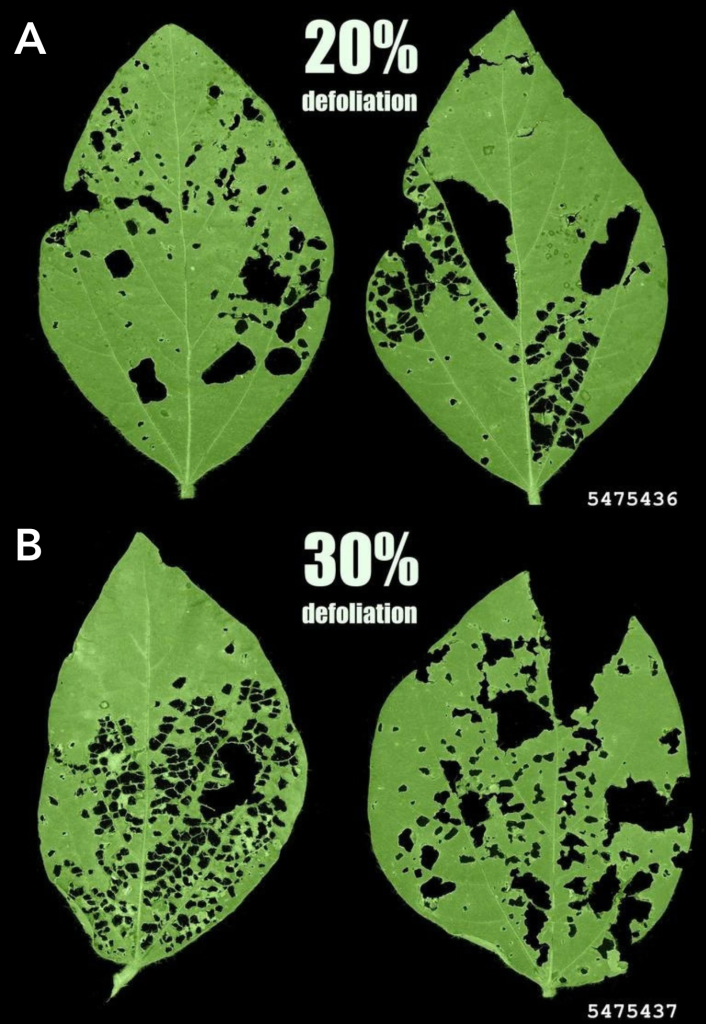
Figure 3. Examples of 20% (A) and 30% (B) defoliation of a soybean leaf. Photos: Roger Schmidt, University of Wisconsin-Madison, Bugwood.org. 547436. 547437.
A structured sampling method fixes corrects estimates. Structured sampling includes: assess four random locations, pull trifoliates from the top, middle, and bottom of ten plants, discard the most and least defoliated leaflet, and base your estimate on the remaining trifoliates.11 Tools like the Crop Protection Network’s online training and the LeafByte app can help calibrate your eye.
Yield & Quality Impacts
Beyond direct yield loss, late‑season defoliation can reduce seed size and weight, increase lodging risk, and, in disease‑driven cases, delay maturity or create uneven dry‑down, complicating harvest timing.
Management & Treatment Decisions
For insect‑driven defoliation, treatment decisions should be based on when field-wide average defoliation exceeds thresholds or when infestations can be managed from treatment to only the field edge. Soybean can compensate from minimal to moderate leaf loss under favorable conditions, so spraying below threshold rarely provides an economic return.
Common thresholds remain at approximately 30% defoliation in vegetative stages and 20% during reproductive stages8, though some regions use slightly more conservative numbers. When scouting, confirm that feeding is active, widespread, and caused by chewing insects rather than natural senescence. Choosing the right product and timing matters less than ensuring the field truly exceeds threshold. Unnecessary insecticide use disrupts beneficial insects and can lead to resistance development.
Authors:
Sagnika Das, University of Illinois Urbana-Champaign and Mark Licht, Iowa State University
References:
1Ohnesorg, W. J. & Hunt, T. E. (2015). Managing Soybean Defoliators (G2259). University of Nebraska–Lincoln Extension. https://extensionpubs.unl.edu/publication/g2259/na/pdf/view
2Basol, T. (2023, June 12). Soybean defoliators are easy to detect. Farm Progress. https://www.farmprogress.com/soybean/soybean-defoliators-are-easy-to-detect
3Basol, T. (2023, July 12). Keep an eye out for soybean defoliators. Integrated Crop Management News, Iowa State University Extension and Outreach. https://crops.extension.iastate.edu/cropnews/2023/07/keep-eye-out-soybean-defoliators
4Cullen, E. (2011, July 28). Japanese beetle – scouting and thresholds for soybean and corn. Integrated Pest and Crop Management, University of Wisconsin-Madison. https://ipcm.wisc.edu/blog/2011/07/japanese-beetle-scouting-and-thresholds-for-soybean-and-corn
5Bayer Crop Science. (2018, July 23). Late-season soybean management. https://www.cropscience.bayer.us/articles/bayer/soybean-management-in-late-season
6Poudel, S., Magar, L. P., Khatri, D., Pandit, M., & Chiluwal, A. (2025). Identifying the most sensitive growth stages of soybean to defoliation. Scientific Reports, 15(1), 28268. https://doi.org/10.1038/s41598-025-12590-7
7Sulzbacher-Schardong, I. (2025). Reevaluating soybean defoliation thresholds in double-cropped and full-season systems [Master’s thesis, North Carolina State University]. NC State University Repository. https://repository.lib.ncsu.edu/bitstreams/2d4368b3-28eb-408c-a9ce-3df4c2a6d4d6/download
8Hodgson, E. (2022, July 18). Train your eyes for soybean defoliation. Integrated Crop Management News, Iowa State University Extension and Outreach. https://crops.extension.iastate.edu/post/train-your-eyes-soybean-defoliation
9Reisig, D. (2025, June 23). Important change to North Carolina soybean defoliation thresholds after beginning flowering (R1). North Carolina State University Extension. https://soybeans.ces.ncsu.edu/news/important-change-to-north-carolina-soybean-defoliation-thresholds-after-beginning-flowering-r1/
10Temple, L. (2023, June 19). 3D scouting tool improves accuracy of soybean defoliation estimates. Soybean Research & Information Network. https://soybeanresearchinfo.com/research-highlight/3d-scouting-tool-improves-accuracy-of-soybean-defoliation-estimates/
11Sulzbacher Schardong, I., Reisig, D. D., Valmorbida, I., Alsdorf, A., Caprini Sagiorato, A., & Clothier. (2026). Comparing actual and perceived soybean defoliation with field surveys and grower estimates. Journal of Integrated Pest Management, 17(1), pmag004. https://doi.org/10.1093/jipm/pmag004