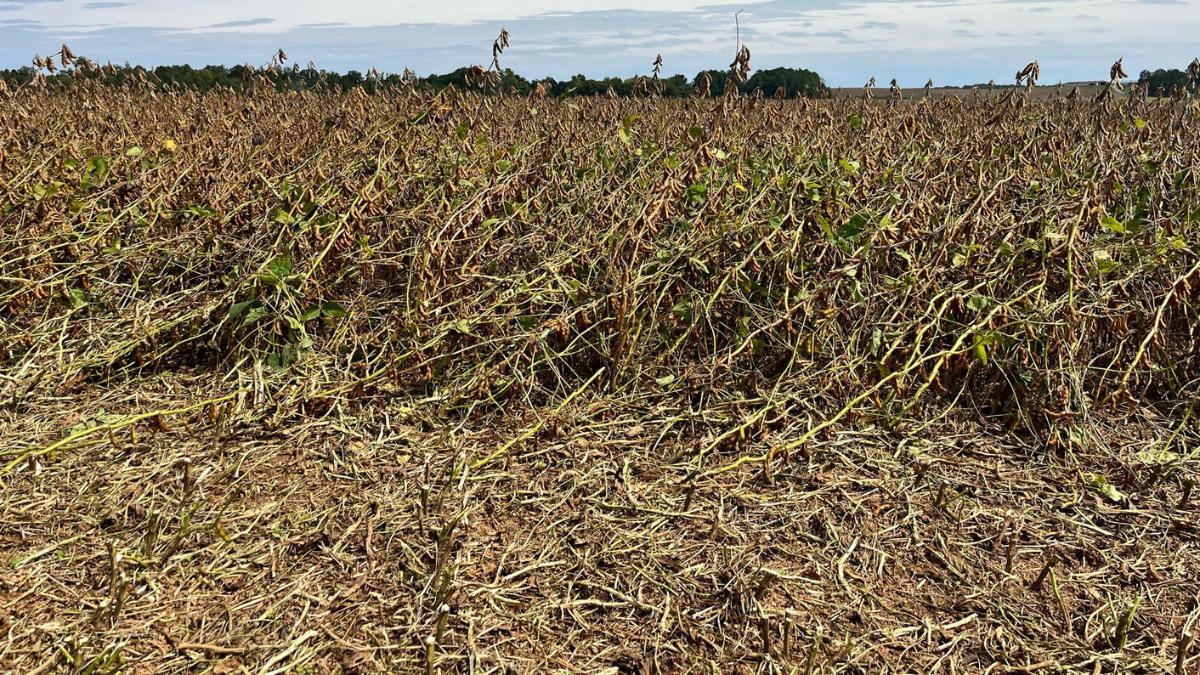
Cover crops: crops planted for seasonal vegetative cover and conservation purposes.
Key Takeaways
- Cover crops have the potential to provide many benefits, such as preventing soil erosion, suppressing weeds, and recycling nutrients
- Winter annual grass cover crops followed by soybean is an excellent approach due to soybeans’ adaptability
- Anticipate challenges and reduce risk by starting on a small scale
- Cover crop expenses may be offset with cost-share programs
Potential Benefits
- Reducing soil erosion
- Suppressing weeds, diseases, and nematodes
- Recycling nutrients
- Alleviating soil crusting
- Conserving soil moisture
- Enhancing organic matter over time
- Improving long-term soil health
- Protecting downstream water quality

Choosing the Right Species
Cover crop species need to be adapted to your unique fields.

Winter annual grasses
Cereal rye, wheat, barley
Best for:
- Cover cropping beginners
- Reducing soil erosion
- Weed suppression due to residue persistence
Grasses are easy to establish, easy to terminate, and easily followed by soybeans. They are widely adapted and easily air-seeded before harvesting or drilled after harvesting. Drilling is the preferred method, but broadcasting and incorporation is easy if you do not have a drill.

Legumes
Best for:
- Providing additional nitrogen to the spring crop

Brassicas
Best for:
- Reducing nematode populations
- Alleviating soil compaction
Some evidence suggests brassica roots do not alleviate compact soils as much as previously thought.
Potential Challenges
Growing cover crops for the first time is a steep learning curve and requires careful planning.
- Planting Challenges
- Cover crop residue can interfere with the planter and lead to inadequate seed furrow closure and seed-to-soil contact.
- Pinning of the cover crop in the seed trench can occur when planting the main crop, especially if the cover crop is not fully dry.
- Planter technologies including downforce, row cleaners, and coulters should be utilized as needed to ensure good seed-to-soil contact when planting into residue.
- Chlorosis (mild and uncommon): a yellowing of normally green leaves due to a lack of chlorophyll.
- Though uncommon in soybeans, mild chlorosis may occur if growing a grass cover crop before soybean.
- Drainage and Moisture Challenges
- Deep-rooted cover crops may plug tile drainage.
- Cover crops can deplete soil moisture before cash crop planting in environments with low rainfall. Early cover crop termination is essential if planting conditions are abnormally dry.
- Cover crops can help reduce soil moisture and enhance field trafficability in environments with high early-season rainfall if terminated later.
- Residue Challenges
- Cover crop residue can lower the soil temperature, which may slow soybean emergence and reduce stands.
- Cover crop residue can serve as a host for insects and pathogens.
- Economic Challenges
- Costs to plant and manage cover crops can be offset using cost-share programs through the NRCS or state programs.
Cover Cropping Checklist
- Identify goals and target issues to address with cover crops.
- Select a cover crop species.
- Identify the best planting date and seeding rate to obtain a manageable amount of cover crop biomass to meet your cropping goals. These items are highly region-dependent.
- Select termination strategy. Some cover crops will be winter-killed. In the spring, termination may be mechanical or chemical.
- Adjust downforce and other planter settings when moving into and out of cover crop areas.
- Check state Extension guidelines and work with a farmer in the area with cover crop experience who can help you avoid common pitfalls.
- Understand the costs of growing, terminating, and managing a cover crop. A cover crop will show up as costs in your annual budgets, but the long-term benefits of cover cropping will eventually offset costs within 5 to 10 years through reduction in soil erosion, nutrient capture, improved soil health, etc.
Pro Tip: Gain experience with relatively low risk by starting on a small scale. Allow yourself time to learn basic management practices, build confidence, and compare results to non-cover cropped fields.
Authors: Giovani Preza Fontes, University of Illinois; Chad Lee, University of Kentucky; Laura Lindsey, The Ohio State University; Mike Mulvaney, Mississippi State University.