Every year, farmers ask about recommendations to consider for delayed or late-planted soybeans. Most of these situations are caused by weather, too much water, hail damage, or the wrong herbicide application. It’s well known that late planting comes with a yield penalty; however, there are some tips and tricks to bump up the yield potential.
Best Practices for Late-Planted Soybean
Variety Selection
First, if facing a planting date more than three weeks past the optimal planting window, growers can switch to a variety with an earlier maturity. Varieties that are well-adapted for early maturity are also well-adapted for vigor, disease resistance, and other factors, so switching varieties also means switching other characteristics as well. This means switching to an early maturing variety that is not adapted to one’s region will likely lower yield. That’s why waiting at least three weeks beyond the optimal planting window to switch maturity selection helps balance the loss of yield potential in an attempt to reach maturity before fall frost.
Row Spacing
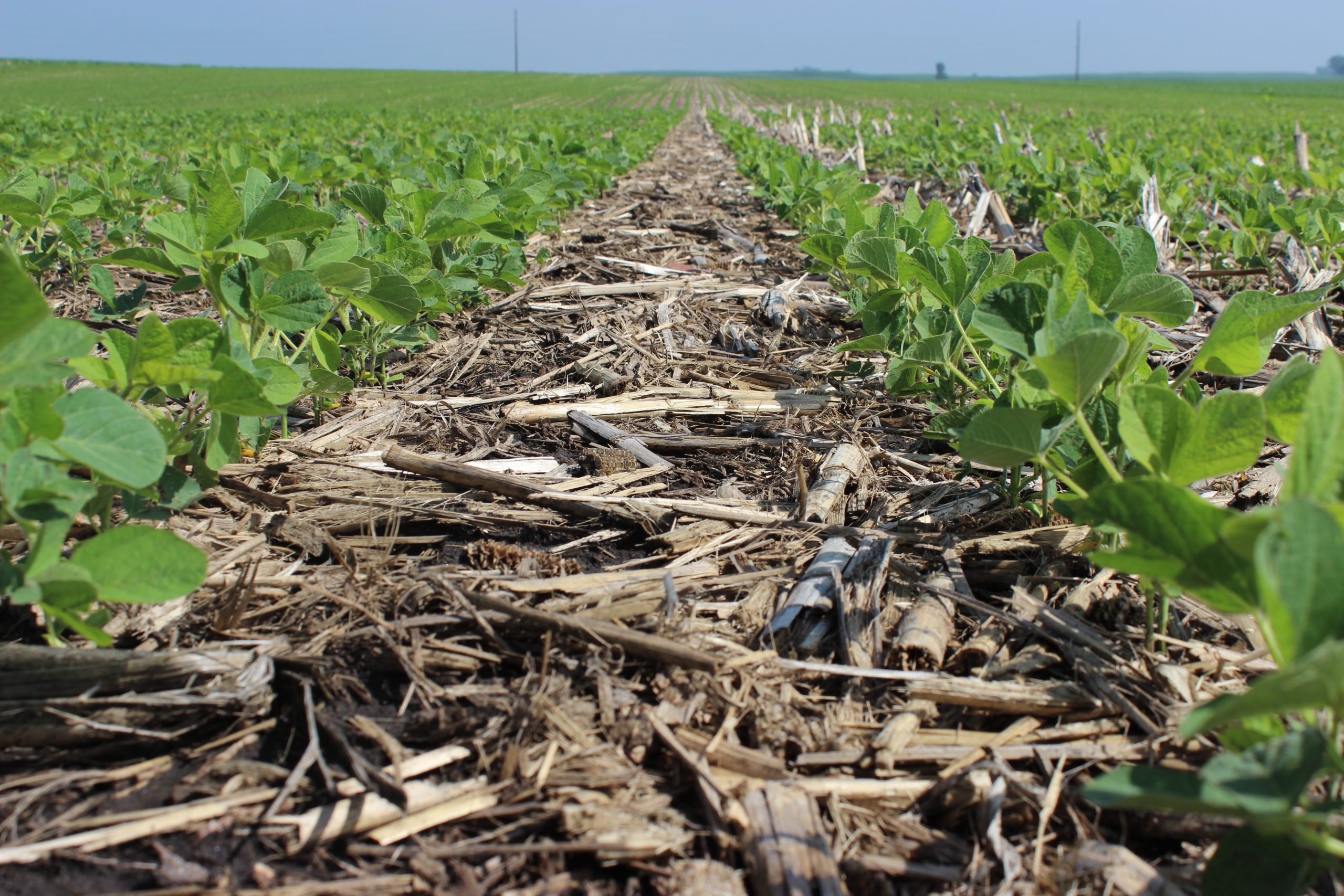
Another strategy is to move to a narrower row spacing. Drill seeding will bring benefits like capturing more sunlight with a full canopy sooner after planting than 15-, 20-, or 30-inch row spacings. If you don’t have access to a drill, consider double planting with the second pass offset, at an angle, or perpendicular to the first row. Double planting would require planting each pass at a half-seeding rate.
Seeding Rate
Growers can also increase their seeding rate. A 10-20% increase in seeding rate will help the soybean plants bush out into the interrow faster. Faster canopy closure will result in more sunlight capture compared to the well-recommended seeding rate.
Crop Insurance Provisions
Lastly, consider crop insurance provisions for “Delayed and Prevented Planting.” Check with a crop insurance agent to determine what the dates for delayed and prevented planting are. If the field has not been planted yet, it may be eligible for coverage. However, if the field was originally planted and is now in a late replanting situation, other crop insurance provisions may provide loss coverage.
Author:
Mark Licht, Iowa State University