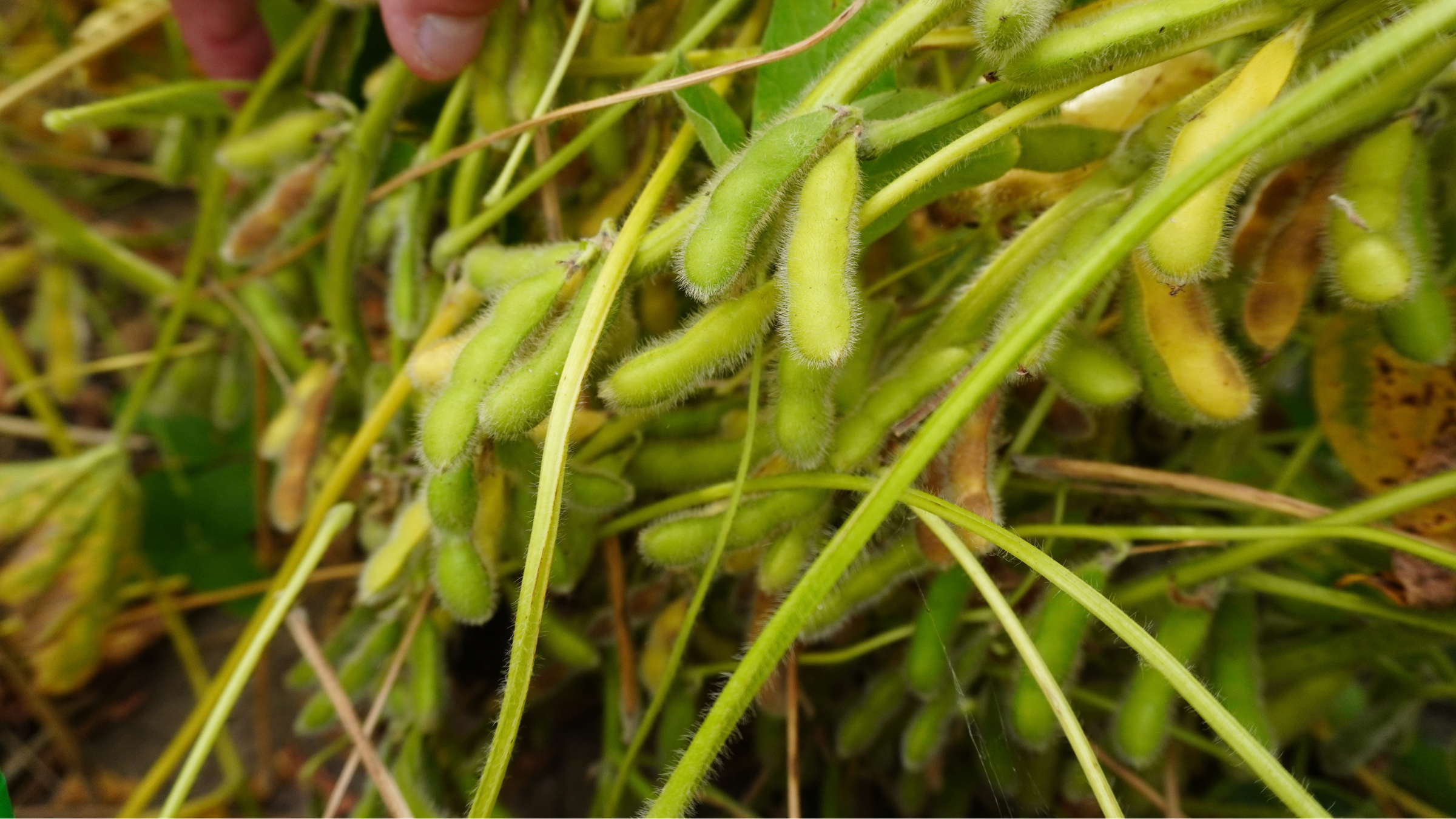
Key Points:
- Timely harvest is important, regardless of stem greenness or pod color.
- Growers should consider yield map corrections based on harvest moisture.
Year in and year out, farmers look to optimize their production and profit. Too often, we leave yield and money in the field due to harvest timing and combine settings. Some fields may have green stems, but the seed is dry enough for harvest (albeit harvest efficiency is limited). Other situations arise when heat and dry weather shut down a crop, leaving little rain or dew to rehydrate dry seed and forcing harvest to get pushed earlier and earlier.
Attention to detail is important throughout the growing season, like deciding which field to plant first, observing weed escapes, correcting for plant nutrition, and protecting against pathogens. These details extend into preparations for a timely harvest. As my dad would say, “the crop is not made until it is harvested and in the bin.” Farmers need to be prepared for an optimal harvest and return when the crop comes early. Soybean harvest doesn’t have the luxury of a high moisture harvest like corn, so we have to be timely on the harvest regardless of stem greenness or pod color.
In truth, we sell soybean on 60-lb nuggets, not bushels by volume. These 60-lb units that we affectionately call bushels are taken at 13% moisture, but they are equally taken at 10% moisture. Unfortunately, we do not get that 3% water weight given back and adjusted accordingly. This 3% difference in water weight would reduce a 60-bu crop to 58 bu/ac and a 75-bu crop to 72.5 bu/ac. These “yield losses” are based on water weight alone (Table 1) and do not account for combine losses such as shattering due to dry seeds or improperly set combines for threshing.
Table 1. Soybean yield “lost” (bu/ac) based on grain moisture harvest below target delivery of 13% and associated yield levels.

One should consider yield map corrections based on harvest moisture so fields are accurately represented agronomically for any management decisions and trends as well as nutrient removal corrections. Please note that adjusting the yield maps has its merits for your agronomics, but will not change the economics if harvest is below 13%.
Author
Shaun Casteel, Purdue University
Published October 19, 2026